Why So Many Handlers Still Register with AssistanceDogRegistry.co.uk

Even though itโ€™s not a legal requirement to register your assistance dog in the UK, thousands of handlers still choose to do it every year.

Hereโ€™s why:

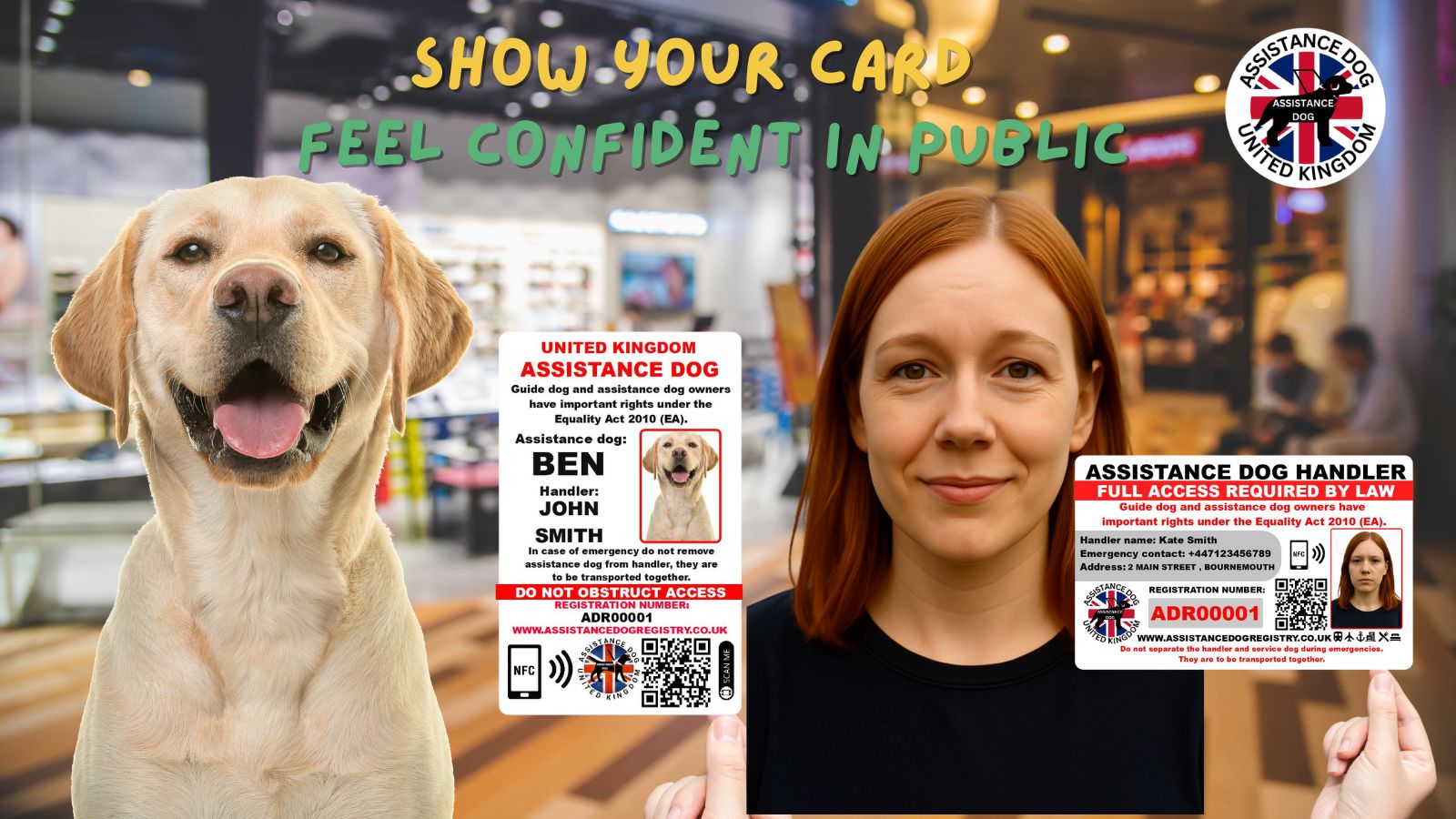
โœ… Proof you can show instantly โ€” With ID cards, dog tags, and NFC-enabled profiles, you never have to explain everything from scratch again.

โœ… Feel more confident in public โ€” Many handlers say that having a professionally printed ID card with legal references gives them peace of mind when questioned.

โœ… No need to rely on a charity โ€” Especially for owner-trained dogs, our voluntary registry gives you recognition and support.

โœ… Linked to real legal rights โ€” Every card references the Equality Act 2010 and comes with a QR profile that handlers can update anytime.

โœ… Peace of mind for carers, parents, and vulnerable users โ€” If anything happens, your dog's info and emergency contacts are accessible.

โœ… It's voluntary, ethical, and transparent โ€” We make it clear that this is not a legal requirement. Weโ€™re here to support, not mislead.

So no โ€” you donโ€™t have to register. But hereโ€™s why doing so can help you take control of difficult public situations and feel more prepared.

Letโ€™s break it down:


๐Ÿšซ Is Registration Legally Required in the UK?

The short answer: No.

Under the Equality Act 2010, disabled people in the UK have the right to be accompanied by their assistance dog without needing any certificate, license, or official registration.

Your rights are based on your need โ€” not a piece of paper.

However, this law is often misunderstood โ€” by shop staff, security, taxi drivers, and even some local councils.

So even if you're fully protected under the law, you may still be challenged.

That's where registration can help, even if itโ€™s not legally required.


๐Ÿ˜• Why So Much Confusion?

Many handlers report things like:

  • โ€œThe restaurant manager asked for a certificate or ID card.โ€
  • โ€œThe bus driver said my dog needed to be charity-trained.โ€
  • โ€œMy GP said I need to register the dog with the council.โ€

These situations can be frustrating and emotionally draining.

And while you donโ€™t have to show any proof, letโ€™s be honest โ€”

Sometimes itโ€™s easier to show something than to argue your rights every single time.

Thatโ€™s why so many people choose to register voluntarily โ€” not to earn their rights, but to stand by them with more confidence.


โœ… What You Get When You Register Voluntarily

At AssistanceDogRegistry.co.uk, we offer:

  • Four high-quality ID cards (for the dog + handler)
  • Three custom dog tags with QR codes
  • Assistance dog lanyard and card holders
  • HI viz vets for handler and assistance dog
  • Online profile you can update any time
  • NFC tap technology โ€” show proof without logging in
  • Your rights printed clearly on the cards (Equality Act 2010)
  • Free replacement card if one is lost or damaged
  • A clear record in case of emergency

This is all part of our Lifetime Package, designed for handler-trained dogs and their real-life needs.


๐Ÿง  Real Reasons Handlers Choose to Register

Hereโ€™s what our users often say:

๐Ÿ—ฃ๏ธ โ€œPeople used to question me all the time. Now they just see the badge and move on.โ€

๐Ÿ—ฃ๏ธ โ€œI trained my own dog. I didnโ€™t go through a charity. This gives me something that feels official โ€” and itโ€™s backed by law.โ€

๐Ÿ—ฃ๏ธ โ€œIโ€™ve had issues at airports and shops. With the tag and card, Iโ€™ve had fewer problems.โ€

๐Ÿ—ฃ๏ธ โ€œEven though I know the law, I get less anxiety when I carry something with me.โ€

๐Ÿ—ฃ๏ธ โ€œHaving the QR code means if anything happens to me, emergency staff know what to do.โ€


๐Ÿ” Watch Out: Not All โ€˜Registriesโ€™ Are Equal

Unfortunately, some websites:

๐Ÿšซ Mislead people into thinking registration is mandatory
๐Ÿšซ Sell generic โ€œservice dogโ€ badges with no UK legal basis
๐Ÿšซ Donโ€™t offer any actual profile or data backup
๐Ÿšซ Arenโ€™t transparent about what you're getting

Weโ€™re different:

  • We explain the law up front.
  • We donโ€™t use scare tactics.
  • We offer real value โ€” no gimmicks.
  • We operate from the UK and follow UK laws.

โœ‰๏ธ Real-World Example

A recent customer wrote to us saying:

โ€œI was told by a council officer I needed to register. When I challenged them, they backed down โ€” but it left me shaken. I signed up here because it gives me confidence to walk into public spaces again.โ€

Others have shared similar stories:

  • Denied access to taxis
  • Confronted by shop staff
  • Struggled to explain medical conditions

They didnโ€™t need to register โ€” but theyโ€™re glad they did.


๐Ÿพ Especially Useful for:

  • Owner-trained assistance dogs (no charity paperwork)
  • Autistic children and families needing quick recognition
  • Handlers with PTSD or invisible disabilities
  • People tired of being asked invasive questions

๐Ÿ’ฌ In Summary: No, You Donโ€™t Have To. But Hereโ€™s Why You Might Want To.

Registering your assistance dog with a voluntary service like ours is not about proving yourself.

Itโ€™s about protecting your peace.

Itโ€™s about avoiding confrontations.

And itโ€™s about being ready, so your focus stays where it matters โ€” on your own safety and wellbeing.


๐ŸŽŸ๏ธ Sign Up for the Lifetime Package Today

๐Ÿ’ก Click here to learn more & register


FAQ

1. What is an assistance dog?

An assistance dog is trained to perform specific tasks to aid individuals with disabilities, enhancing their independence and quality of life.

Wikipedia

2. Why is socialization important for assistance dogs?

Proper socialization ensures assistance dogs remain calm, focused, and well-behaved in various public settings, enabling them to perform their duties effectively.

3. At what age should I start socializing my assistance dog?

It's beneficial to begin socialization during puppyhood; however, with patience and consistent training, dogs of any age can learn to navigate public environments confidently.

4. How long does it take to socialize an assistance dog?

The duration varies based on the dog's temperament, previous experiences, and the consistency of training. Regular, positive exposure to different environments is key.

5. Can I socialize my assistance dog if they are older?

Yes, older dogs can be socialized successfully. While it may require more time and patience, with positive reinforcement, they can adapt to new situations.

6. What should I do if my assistance dog shows fear in public?

If your dog exhibits fear, calmly remove them from the situation and gradually reintroduce the stimulus at a comfortable distance, rewarding calm behavior.

7. How do I handle public distractions during training?

Teach focus commands like "watch me" to redirect your dog's attention. Gradual exposure to distractions, paired with positive reinforcement, can improve focus.

8. Are there specific public places ideal for socialization?

Begin with quiet areas like parks, then progress to busier environments such as cafes, public transport, and shopping centres as your dog becomes more comfortable.

9. How can I ensure my assistance dog behaves appropriately around other animals?

Controlled introductions and rewarding calm behaviour are essential. Consistent training helps your dog remain focused on their tasks, even around other animals.

10. What are the legal requirements for assistance dogs in public places?

In many regions, assistance dogs are permitted in public areas to support their handlers. It's important to familiarize yourself with local laws and regulations regarding assistance dogs.

Learn more about our Lifelong Partner Package

Learn More โ€“ Additional Assistance Dog Letter Templates

If you found this travel guide useful, you may also benefit from these other essential assistance dog letter templates weโ€™ve published:

๐Ÿ“Œ Housing Accommodation Request Letter โ€“ Need to request reasonable accommodation from your landlord? This template ensures your rights under the Equality Act 2010 are respected.

๐Ÿ“Œ Workplace Assistance Dog Request Letter โ€“ If you need accommodations to bring your assistance dog to work, this letter outlines your legal rights and reasonable adjustments your employer should consider.

๐Ÿ“Œ Medical Confirmation of Need for an Assistance Dog โ€“ A doctorโ€™s letter template to confirm your need for an assistance dog for public access, travel, and daily life.

๐Ÿ”น More templates are coming soon! Let us know if you have specific needs, and weโ€™ll create more resources to support assistance dog handlers.

Related Post

More Helpful Guides for Handlers

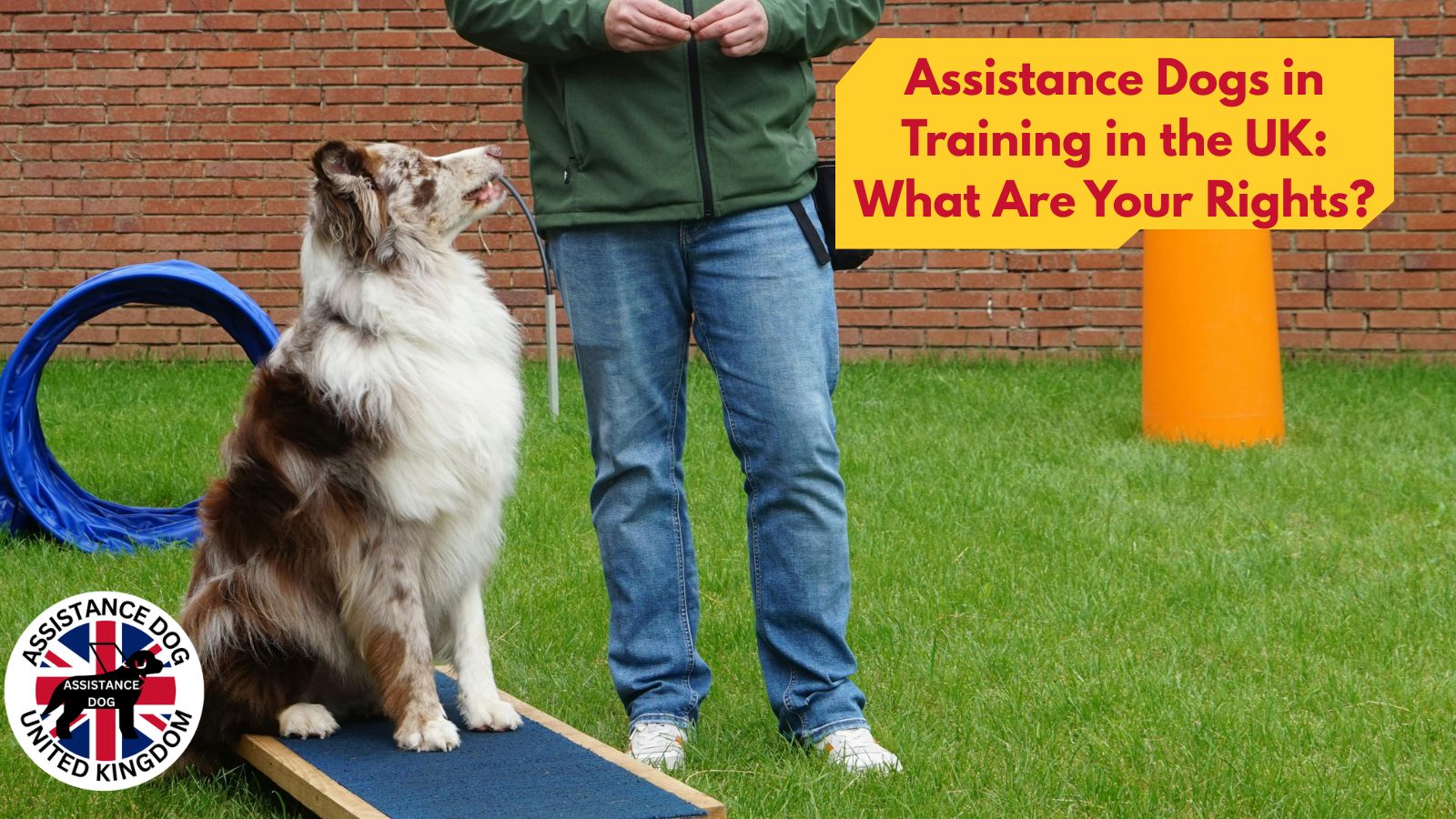
Assistance Dogs in Training in the UK: What Are Your Rights?
Est. Reading: 6 minutes

Assistance Dogs in Training in the UK: What Are Your Rights?

If you are training your own assistance dog, one question comes up repeatedly:

“Do assistance dogs in training have legal rights in the UK?”

This is one of the most misunderstood areas of UK assistance dog law and it’s also the stage where handlers report the highest level of anxiety and public challenge.

You don’t want confrontation.
You don’t want to be challenged in front of others.
You don’t want to say the wrong thing.

So let’s break this down clearly, practically, and honestly.

Do Assistance Dogs in Training Have Legal Protection Under the Equality Act 2010?

The Equality Act 2010 protects disabled people who use an assistance dog trained to perform tasks related to their disability.

The law does not:

  • Require registration
  • Require certification
  • Require ID cards
  • Require charity affiliation
  • Require the dog to come from a specific organisation

Legal protection attaches to the disabled person, not the organisation that trained the dog.

However, the key issue is behaviour and function.

If your dog is being trained to perform disability-related tasks and behaves appropriately in public, protection may apply.

If your dog is disruptive, uncontrolled, or not yet capable of reliable public behaviour, a business may lawfully ask you to leave based on behaviour not because the dog is “in training.”

Behaviour determines strength of position.

The Legal Grey Area: Why “In Training” Creates Confusion

The Equality Act does not define the phrase “assistance dog in training.”

This is where confusion starts.

In practice:

  • A dog that already performs trained tasks and is well behaved is clearly protected.
  • A young puppy still learning obedience is harder to defend as an assistance dog in legal terms.

This is why many experienced UK trainers advise:

Build reliability first.
Introduce complex public environments gradually.

The stronger the behaviour, the stronger your legal footing.

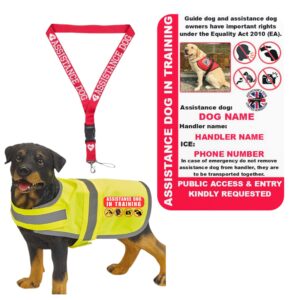
Assistance Dog in Training Info Card

Can Shops, Cafés or Taxis Refuse an Assistance Dog in Training?

If your dog is:

  • Calm
  • Under control
  • Not barking, lunging or sniffing excessively
  • Clearly task-focused

Refusal purely because the dog is “in training” may amount to discrimination.

However, if the dog is:

  • Reacting to other dogs
  • Not toilet trained
  • Jumping, whining or disruptive
  • Unable to settle

A business may lawfully refuse entry based on behaviour.

This distinction matters.

Businesses cannot refuse based on a blanket “no dogs” policy.

They can refuse based on genuine disruption.

Why the Training Phase Creates the Most Public Friction

This is something many new handlers are not prepared for.

During the training stage, you may experience:

  • More questioning from staff
  • More public attention
  • More uncertainty
  • More “Where’s the paperwork?” moments
  • More second-guessing

Even when you are legally correct, confrontation is emotionally exhausting.

This is not a legal weakness.
It is a human reality.

Voluntary Registration During Training: Why Many Handlers Choose It

There is no official UK assistance dog register.

You are not legally required to register your assistance dog whether fully trained or still in training.

However, many owner-trainers choose to create a structured assistance dog profile during the training phase.

Not because the law requires it.

But because real-world experience shows it reduces anxiety and confrontation.

Instead of arguing, they can calmly reference structured documentation.

Instead of explaining repeatedly, they can present:

  • A clear handler declaration
  • A task outline
  • A summary of Equality Act protections
  • A professional, consistent format

This does not create legal rights.

It does not replace behaviour.

But it often changes the dynamic of the conversation.

Handlers frequently report that simply knowing they have structured documentation reduces their own anxiety even when they never need to show it.

Confidence influences body language.
Body language influences public response.

During training, that psychological support matters.

Public Transport and Dogs in Training

Taxi drivers have specific legal duties under UK law. Refusing an assistance dog without a valid medical exemption can be a criminal offence.

However, in practice, dogs in training are more likely to be questioned.

If your dog is:

  • Calm
  • Under control
  • Clearly task-oriented

You are in a stronger position.

If your dog is visibly unsettled or reactive, the situation becomes more complex.

Again, behaviour is the foundation.

What To Say If You Are Challenged

If someone questions you, remain calm.

You may be asked:

  • “Is this an assistance dog?”
  • “Is it fully trained?”
  • “Do you have proof?”

You are not required to disclose your medical condition.

A calm response might be:

“My dog is being trained to perform tasks related to my disability and is under control.”

If the dog is behaving appropriately and access is refused purely because it is “in training,” you may consider following up with a written complaint referencing the Equality Act 2010.

Documentation of interactions can be helpful.

Common Myths About Assistance Dogs in Training

Myth: Dogs in training have no rights.
Reality: Protection depends on disability status and behaviour.

Myth: You must register your dog to have rights.
Reality: There is no official UK register.

Myth: Businesses can demand certification.
Reality: There is no mandatory certification system.

Myth: Puppies automatically qualify.
Reality: Task function and public behaviour determine legitimacy.

Should You Train in Public Before Your Dog Is Ready?

Rushing public access too early often creates negative experiences that slow long-term progress.

Gradual exposure protects:

  • Your dog’s confidence
  • Your own confidence
  • Your credibility in public

Strong foundation first.
Complex environments second.Legal rights are strongest when behaviour is strongest.

Legal Information Disclaimer

This article provides general guidance only and does not constitute legal advice.
For advice specific to your situation, contact ACAS or a qualified legal professional.

ACAS Helpline:
📱 0300 123 1100 — Monday to Friday, 8am–6pm (standard UK call rates apply)

Text Relay (for people who are deaf or have speech impairments):
☎️ 18001 0300 123 1100

Register your assistance dog today and enjoy every sunny moment without setbacks.

🎟️ Sign Up for the Lifetime Package Today

💡 Click here to learn more & register


FAQ

1. What is an assistance dog?

An assistance dog is trained to perform specific tasks to aid individuals with disabilities, enhancing their independence and quality of life.

Wikipedia

2. Why is socialization important for assistance dogs?

Proper socialization ensures assistance dogs remain calm, focused, and well-behaved in various public settings, enabling them to perform their duties effectively.

3. At what age should I start socializing my assistance dog?

It's beneficial to begin socialization during puppyhood; however, with patience and consistent training, dogs of any age can learn to navigate public environments confidently.

4. How long does it take to socialize an assistance dog?

The duration varies based on the dog's temperament, previous experiences, and the consistency of training. Regular, positive exposure to different environments is key.

5. Can I socialize my assistance dog if they are older?

Yes, older dogs can be socialized successfully. While it may require more time and patience, with positive reinforcement, they can adapt to new situations.

6. What should I do if my assistance dog shows fear in public?

If your dog exhibits fear, calmly remove them from the situation and gradually reintroduce the stimulus at a comfortable distance, rewarding calm behavior.

7. How do I handle public distractions during training?

Teach focus commands like "watch me" to redirect your dog's attention. Gradual exposure to distractions, paired with positive reinforcement, can improve focus.

8. Are there specific public places ideal for socialization?

Begin with quiet areas like parks, then progress to busier environments such as cafes, public transport, and shopping centres as your dog becomes more comfortable.

9. How can I ensure my assistance dog behaves appropriately around other animals?

Controlled introductions and rewarding calm behaviour are essential. Consistent training helps your dog remain focused on their tasks, even around other animals.

10. What are the legal requirements for assistance dogs in public places?

In many regions, assistance dogs are permitted in public areas to support their handlers. It's important to familiarize yourself with local laws and regulations regarding assistance dogs.

Learn more about our Lifelong Partner Package

Learn More – Additional Assistance Dog Letter Templates

If you found this travel guide useful, you may also benefit from these other essential assistance dog letter templates we’ve published:

📌 Housing Accommodation Request Letter – Need to request reasonable accommodation from your landlord? This template ensures your rights under the Equality Act 2010 are respected.

📌 Workplace Assistance Dog Request Letter – If you need accommodations to bring your assistance dog to work, this letter outlines your legal rights and reasonable adjustments your employer should consider.

📌 Medical Confirmation of Need for an Assistance Dog – A doctor’s letter template to confirm your need for an assistance dog for public access, travel, and daily life.

🔹 More templates are coming soon! Let us know if you have specific needs, and we’ll create more resources to support assistance dog handlers.
Est. Reading: 4 minutes

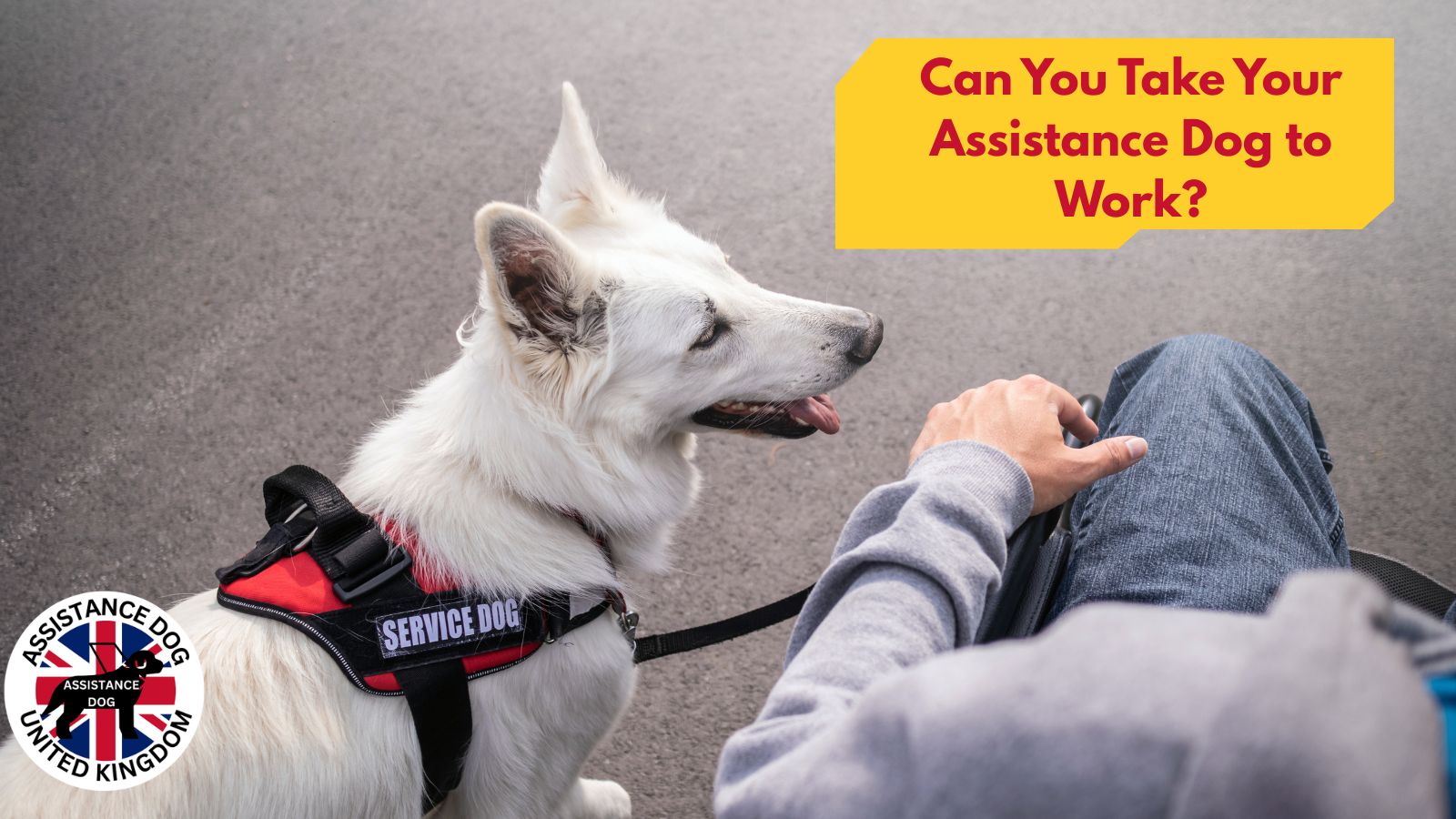
Can You Take Your Assistance Dog to Work?

Can You Take Your Assistance Dog to Work in the UK? Your Legal Rights Explained.

Yes in most cases, you can take your assistance dog to work in the UK.

Under the Equality Act 2010, employers have a legal duty to make reasonable adjustments for disabled employees. If you rely on an assistance dog at work in the UK, a blanket “no dogs” policy cannot automatically override your rights.

This guide explains what the law says, what reasonable adjustments mean in practice, and what to do if your employer refuses your request.


What the Equality Act 2010 Says About Assistance Dogs at Work

The Equality Act 2010 protects disabled people from discrimination in the workplace. This protection applies to recruitment, employment terms, and working conditions.

If your disability means you rely on an assistance dog, your employer must consider allowing the dog as a reasonable adjustment.

Importantly, UK law does not distinguish between charity-trained and owner-trained assistance dogs. There is also no legal requirement for registration, a vest, or formal ID. However, many handlers choose to carry voluntary identification to reduce friction in workplace conversations.


What Are “Reasonable Adjustments” in the Workplace?

Reasonable adjustments are changes that remove barriers for disabled employees. The goal is to prevent disadvantage caused by disability.

In practice, adjustments involving an assistance dog may include:

  • Allowing the dog during working hours
  • Providing space for the dog to rest
  • Adjusting desk layout or seating arrangements
  • Allowing short breaks for water or toileting
  • Informing colleagues appropriately (without disclosing medical details)

What counts as “reasonable” depends on factors such as employer size, cost, and the nature of the work environment. However, refusing outright without consideration is unlikely to be lawful.


Can an Employer Refuse an Assistance Dog Because of Allergies?

Allergies are a common concern. However, one employee’s allergy does not automatically override another employee’s disability rights.

Employers must balance both needs.

Possible solutions include:

  • Adjusting seating arrangements
  • Separating workspaces
  • Improving ventilation
  • Using air purifiers
  • Adjusting schedules

The key point is that employers must explore alternatives before excluding the assistance dog completely.


What to Do If Your Employer Says No

If your employer refuses your request, take these steps:

1. Put Your Request in Writing

Reference the Equality Act 2010 and explain how your dog supports your disability.

2. Escalate Through HR

If informal discussions fail, request a formal review of reasonable adjustments.

3. Contact ACAS

ACAS provides free, impartial workplace advice. Visit acas.org.uk or call 0300 123 1100.

4. Consider Legal Advice

If reasonable adjustments are refused without justification, you may have grounds for a disability discrimination claim.


Access to Work: Government Support

The Access to Work scheme provides financial support for disabled employees in the UK.

This support may include specialist equipment, travel costs, or other assistance to help you stay in work.

Although it does not replace your employer’s legal duties, it can make workplace adjustments easier to implement.

Learn more at gov.uk/access-to-work.

Legal Information Disclaimer

This article is provided for general informational purposes only and does not constitute legal advice. Employment situations vary, and the application of the Equality Act 2010 depends on individual circumstances. For advice specific to your situation, consider speaking with ACAS or a qualified employment solicitor.

Register your assistance dog today and enjoy every sunny moment without setbacks.

🎟️ Sign Up for the Lifetime Package Today

💡 Click here to learn more & register


FAQ

1. What is an assistance dog?

An assistance dog is trained to perform specific tasks to aid individuals with disabilities, enhancing their independence and quality of life.

Wikipedia

2. Why is socialization important for assistance dogs?

Proper socialization ensures assistance dogs remain calm, focused, and well-behaved in various public settings, enabling them to perform their duties effectively.

3. At what age should I start socializing my assistance dog?

It's beneficial to begin socialization during puppyhood; however, with patience and consistent training, dogs of any age can learn to navigate public environments confidently.

4. How long does it take to socialize an assistance dog?

The duration varies based on the dog's temperament, previous experiences, and the consistency of training. Regular, positive exposure to different environments is key.

5. Can I socialize my assistance dog if they are older?

Yes, older dogs can be socialized successfully. While it may require more time and patience, with positive reinforcement, they can adapt to new situations.

6. What should I do if my assistance dog shows fear in public?

If your dog exhibits fear, calmly remove them from the situation and gradually reintroduce the stimulus at a comfortable distance, rewarding calm behavior.

7. How do I handle public distractions during training?

Teach focus commands like "watch me" to redirect your dog's attention. Gradual exposure to distractions, paired with positive reinforcement, can improve focus.

8. Are there specific public places ideal for socialization?

Begin with quiet areas like parks, then progress to busier environments such as cafes, public transport, and shopping centres as your dog becomes more comfortable.

9. How can I ensure my assistance dog behaves appropriately around other animals?

Controlled introductions and rewarding calm behaviour are essential. Consistent training helps your dog remain focused on their tasks, even around other animals.

10. What are the legal requirements for assistance dogs in public places?

In many regions, assistance dogs are permitted in public areas to support their handlers. It's important to familiarize yourself with local laws and regulations regarding assistance dogs.

Learn more about our Lifelong Partner Package

Learn More – Additional Assistance Dog Letter Templates

If you found this travel guide useful, you may also benefit from these other essential assistance dog letter templates we’ve published:

📌 Housing Accommodation Request Letter – Need to request reasonable accommodation from your landlord? This template ensures your rights under the Equality Act 2010 are respected.

📌 Workplace Assistance Dog Request Letter – If you need accommodations to bring your assistance dog to work, this letter outlines your legal rights and reasonable adjustments your employer should consider.

📌 Medical Confirmation of Need for an Assistance Dog – A doctor’s letter template to confirm your need for an assistance dog for public access, travel, and daily life.

🔹 More templates are coming soon! Let us know if you have specific needs, and we’ll create more resources to support assistance dog handlers.
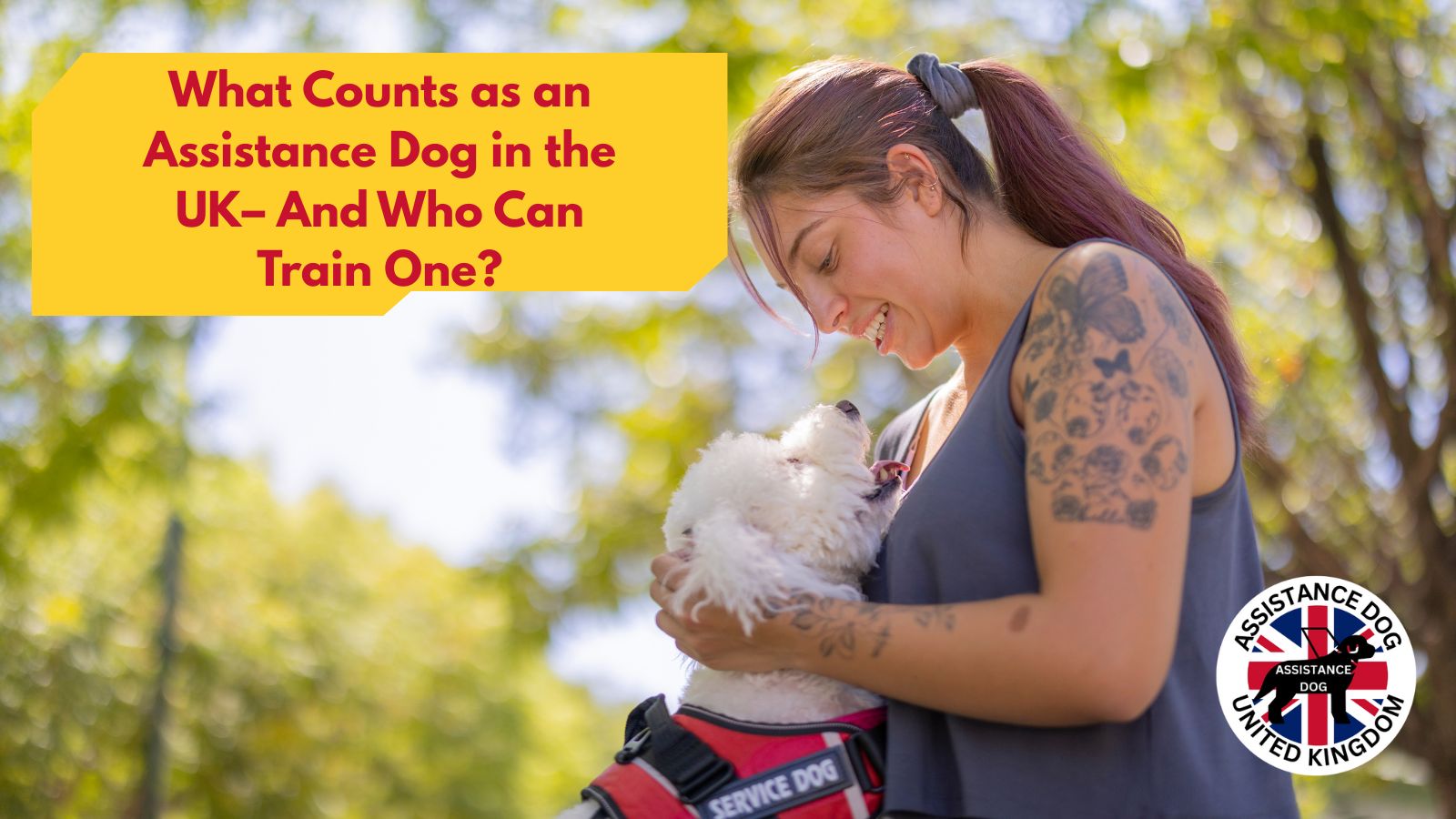
What Counts as an Assistance Dog in the UK – And Who Can Train One?
Est. Reading: 6 minutes

What Counts as an Assistance Dog in the UK and Who Can Train One?

If you’ve ever wondered exactly what qualifies as an assistance dog in the UK, you’re not alone.

One of the most common questions from both dog owners and business owners is whether a dog must be trained by a charity to count as an assistance dog. The short answer is no but the confusion comes from how the law was originally written.

This guide explains what the Equality Act 2010 actually says, what the current legal guidance means in practice, and who can train an assistance dog today.


Understanding What the Law Says

The Equality Act 2010 protects disabled people who rely on assistance dogs.
Section 173 of the Act defines an assistance dog as:

“a dog which has been trained by a prescribed charity to assist a disabled person.”

That wording was drafted over a decade ago when only a few charities such as Guide Dogs for the Blind and Hearing Dogs for Deaf People were operating publicly. At the time, most assistance dogs came from those organisations, which is why the law used the phrase “prescribed charity.”

However, as the role of assistance dogs expanded, this definition became outdated. Thousands of disabled people now train their own dogs, and these dogs perform essential tasks such as medical alerts, mobility support, psychiatric interruption, and deep-pressure therapy. These owner-trained dogs are equally protected under the Equality Act when accompanying their handlers in public.


The Modern Legal Interpretation

The official body responsible for enforcing the Equality Act the Equality and Human Rights Commission (EHRC) has made the current position clear.
According to its guidance for businesses and service providers:

“Whilst there is no legal requirement for an assistance dog to be trained, most are likely to be trained either by their owner or by a specialist organisation.”

This means there is no requirement for a dog to be trained by a charity.
What matters legally is that the dog has been trained by anyone to carry out specific tasks that mitigate a person’s disability, and that it behaves safely and responsibly in public spaces.

(Source: Equality and Human Rights Commission Assistance dogs: a guide for all businesses and service providers)
(Source: Equality Act 2010, Section 173 legislation.gov.uk)


What Counts as an Assistance Dog?

An assistance dog is a working dog trained to perform one or more tasks directly related to a person’s disability. Examples include:

• Guiding a person with visual impairment
• Alerting to sounds or alarms for people who are deaf
• Detecting medical changes such as low blood sugar or seizures
• Providing stability, retrieving items, or opening doors for mobility support
• Interrupting panic attacks or performing grounding tasks for PTSD and anxiety

A dog does not need to wear a vest, carry a certificate, or belong to a specific charity to qualify. Identification and training records can be useful, but the key factors are the dog’s behaviour, control, and purpose.


Owner-Trained vs Charity-Trained Dogs

Both owner-trained and charity-trained dogs can meet the same standards.
Charity-trained dogs usually follow a structured, accredited program, while owner-trained dogs are customised to the handler’s unique needs. What matters is reliability and behaviour in public.

Many handlers choose to train their own dogs because waiting lists for charity programs can be long, or because they need a dog trained for a very specific type of task. Others begin training with the support of independent instructors or local trainers familiar with disability-specific skills.


Common Myths About Assistance Dogs

Myth 1: The dog must be trained by a registered charity.
False. There is no such legal requirement in the UK. The EHRC confirms that dogs can be trained by their owners.

Myth 2: You must have an ID card or certificate.
False. No government issued ID exists. Handlers often carry identification voluntarily to avoid misunderstandings, but it is not mandatory.

Myth 3: Emotional support animals have the same rights.
False. Emotional support animals, though valuable, are not automatically recognised as assistance dogs under UK law. The key difference is that assistance dogs are trained to perform specific disability-related tasks.


Responsibilities of Handlers and Businesses

For Handlers
• Your dog must remain under control at all times.
• The dog should be clean, calm, and non-disruptive in public places.
• Use of a harness, vest, or information card is optional but often helps educate others.
• Carry a polite information card summarising your rights and your dog’s training purpose.

For Businesses
• Do not ask for proof or paperwork there is no legal registration system.
• You may politely ask, “Is the dog required because of a disability?” and “What tasks is it trained to perform?”
• Only refuse entry if there is a legitimate safety or health reason, such as restricted access to sterile medical areas.
• Treat assistance dog handlers with the same respect as any other customer.


Why the Law Protects Owner-Trained Dogs

The Equality Act focuses on the rights of the disabled person, not the method of training.
If a dog performs tasks that mitigate a disability and behaves appropriately in public, it meets the spirit of the law regardless of who trained it. The aim of the Act is inclusion ensuring disabled people can access shops, restaurants, housing, and transport without discrimination.

This modern interpretation allows freedom, fairness, and independence for thousands of disabled people who rely on their self-trained or privately trained assistance dogs every day.


Our Mission and Why the Registry Exists

The Assistance Dog Registry UK was created to make everyday life smoother and more respectful for assistance dog handlers across the country. Our mission is to promote understanding, visibility, and equal access for everyone who depends on a trained assistance dog whether charity-trained or owner-trained.

We operate as a voluntary, educational registry to help businesses and the public recognise genuine assistance dogs and to reduce the conflicts and confusion that often arise at doors, shops, or public venues. Every registration helps raise awareness, protect rights, and show that responsible handlers and well-trained dogs are part of a positive, inclusive community.

By joining the registry, you’re not simply creating a profile or receiving an information card — you’re supporting a nationwide movement for dignity, respect, and equal treatment under the law.

Together, we are helping the UK become a place where assistance dog handlers are recognised and welcomed everywhere.


Our Assistance Dog Registry offers smart, professional tools to help you:

  • Instantly show your dog’s role and legal rights with Smart ID Cards
  • Provide staff with proof via a QR Code linked to the Equality Act 2010
  • Present your custom dog profile and handler details in seconds
  • Wear your support gear with confidence (lanyard, dog tags, vest)
  • Enjoy the benefits of voluntary registration that supports your rights without replacing or contradicting the law

Stay Confident This Summer

You deserve peace of mind when you're out enjoying the sunshine. With proper registration and public-friendly ID tools, you can confidently navigate the spaces where others still need educating.

Register your assistance dog today and enjoy every sunny moment without setbacks.

🎟️ Sign Up for the Lifetime Package Today

💡 Click here to learn more & register


FAQ

1. What is an assistance dog?

An assistance dog is trained to perform specific tasks to aid individuals with disabilities, enhancing their independence and quality of life.

Wikipedia

2. Why is socialization important for assistance dogs?

Proper socialization ensures assistance dogs remain calm, focused, and well-behaved in various public settings, enabling them to perform their duties effectively.

3. At what age should I start socializing my assistance dog?

It's beneficial to begin socialization during puppyhood; however, with patience and consistent training, dogs of any age can learn to navigate public environments confidently.

4. How long does it take to socialize an assistance dog?

The duration varies based on the dog's temperament, previous experiences, and the consistency of training. Regular, positive exposure to different environments is key.

5. Can I socialize my assistance dog if they are older?

Yes, older dogs can be socialized successfully. While it may require more time and patience, with positive reinforcement, they can adapt to new situations.

6. What should I do if my assistance dog shows fear in public?

If your dog exhibits fear, calmly remove them from the situation and gradually reintroduce the stimulus at a comfortable distance, rewarding calm behavior.

7. How do I handle public distractions during training?

Teach focus commands like "watch me" to redirect your dog's attention. Gradual exposure to distractions, paired with positive reinforcement, can improve focus.

8. Are there specific public places ideal for socialization?

Begin with quiet areas like parks, then progress to busier environments such as cafes, public transport, and shopping centres as your dog becomes more comfortable.

9. How can I ensure my assistance dog behaves appropriately around other animals?

Controlled introductions and rewarding calm behaviour are essential. Consistent training helps your dog remain focused on their tasks, even around other animals.

10. What are the legal requirements for assistance dogs in public places?

In many regions, assistance dogs are permitted in public areas to support their handlers. It's important to familiarize yourself with local laws and regulations regarding assistance dogs.

Learn more about our Lifelong Partner Package

Learn More – Additional Assistance Dog Letter Templates

If you found this travel guide useful, you may also benefit from these other essential assistance dog letter templates we’ve published:

📌 Housing Accommodation Request Letter – Need to request reasonable accommodation from your landlord? This template ensures your rights under the Equality Act 2010 are respected.

📌 Workplace Assistance Dog Request Letter – If you need accommodations to bring your assistance dog to work, this letter outlines your legal rights and reasonable adjustments your employer should consider.

📌 Medical Confirmation of Need for an Assistance Dog – A doctor’s letter template to confirm your need for an assistance dog for public access, travel, and daily life.

🔹 More templates are coming soon! Let us know if you have specific needs, and we’ll create more resources to support assistance dog handlers.
1 2 3 4
Assistance Dog Registry usertagcalendar-fullclock
linkedin facebook pinterest youtube rss twitter instagram facebook-blank rss-blank linkedin-blank pinterest youtube twitter instagram