The 5 Most Hurtful Things People Say to Assistance Dog Handlers (And How to Respond)
Assistance dog handlers often face comments that sting, drain confidence, or create pressure to “prove” something they should never have to prove. If you’ve ever walked away replaying a sentence in your head, this guide is for you.
Below are five common remarks people search for online, plus real-world scenarios and calm, factual responses you can use without oversharing personal information.
1) “You don’t look disabled.”
This often happens quietly. You’re in a queue, or walking into a shop, and someone looks from your dog to you and back again. Then it lands:
“You don’t look disabled.”
In that moment, many handlers feel exposed like their body has failed an invisible test. Invisible disability is real, and it is common.
A calm response you can use
“Not all disabilities are visible.”
If you want a slightly firmer version
“Disability isn’t always visible.”
2) “Is that a real assistance dog?”
This one usually arrives with suspicion. A stranger or staff member pauses, watches your dog, and asks “real” as if you’re being audited in public.
“Is that a real assistance dog?”
It can feel like you’re being forced to defend your life, especially when you’re already managing anxiety, overwhelm, or fatigue.
A calm response you can use
“Yes. My dog assists me with my disability.”
Keep it simple. You’re stating function, not inviting debate.
3) “We don’t allow dogs in here.”
This is the moment many handlers dread: you’ve already entered the space, you’re trying to stay regulated, and someone approaches with a rule meant for pets.
“Sorry, we don’t allow dogs.”
Even when you know your rights, being challenged can spike stress fast especially if the interaction is public, loud, or confrontational.
A calm response you can use
“Assistance dogs are legally allowed to accompany their handler.”
If the person seems open to learning, you can add one short line: “This is different from pet access.”
Want a deeper breakdown? Read: Assistance dog access rights in the UK.
4) “Where’s your ID or proof?”
This one often comes from staff trying to “follow policy” — but it still creates pressure. You might hear it at a reception desk, a restaurant entrance, or during a tense moment at the till.
“Do you have ID?”
The hardest part isn’t the question. It’s the feeling that access depends on paperwork — when you’re already stretched thin.
A calm response you can use
“There’s no legal requirement for ID for assistance dogs in the UK.”
If you want to keep it cooperative: “I’m happy to explain the guidance if it helps.”
5) “That’s just an emotional support dog.”
This one can feel dismissive. Sometimes it’s said with a shrug, sometimes with an eye-roll, and it can instantly make a handler feel small.
“That’s just an emotional support dog.”
Labels get messy online. The simplest way to stay grounded is to bring the conversation back to what your dog does.
A calm response you can use
“My dog is trained to assist with my disability.”
No argument. No defence. Just function.
A calmer way to handle these moments
You are never required to share private medical details. Your rights exist regardless of whether you carry paperwork.
That said, many handlers choose optional support tools (like a short law summary card or profile) because it can reduce stressful back-and-forth and help the law speak for itself when words are hard to find.
It’s always optional. The goal is relief, not permission.
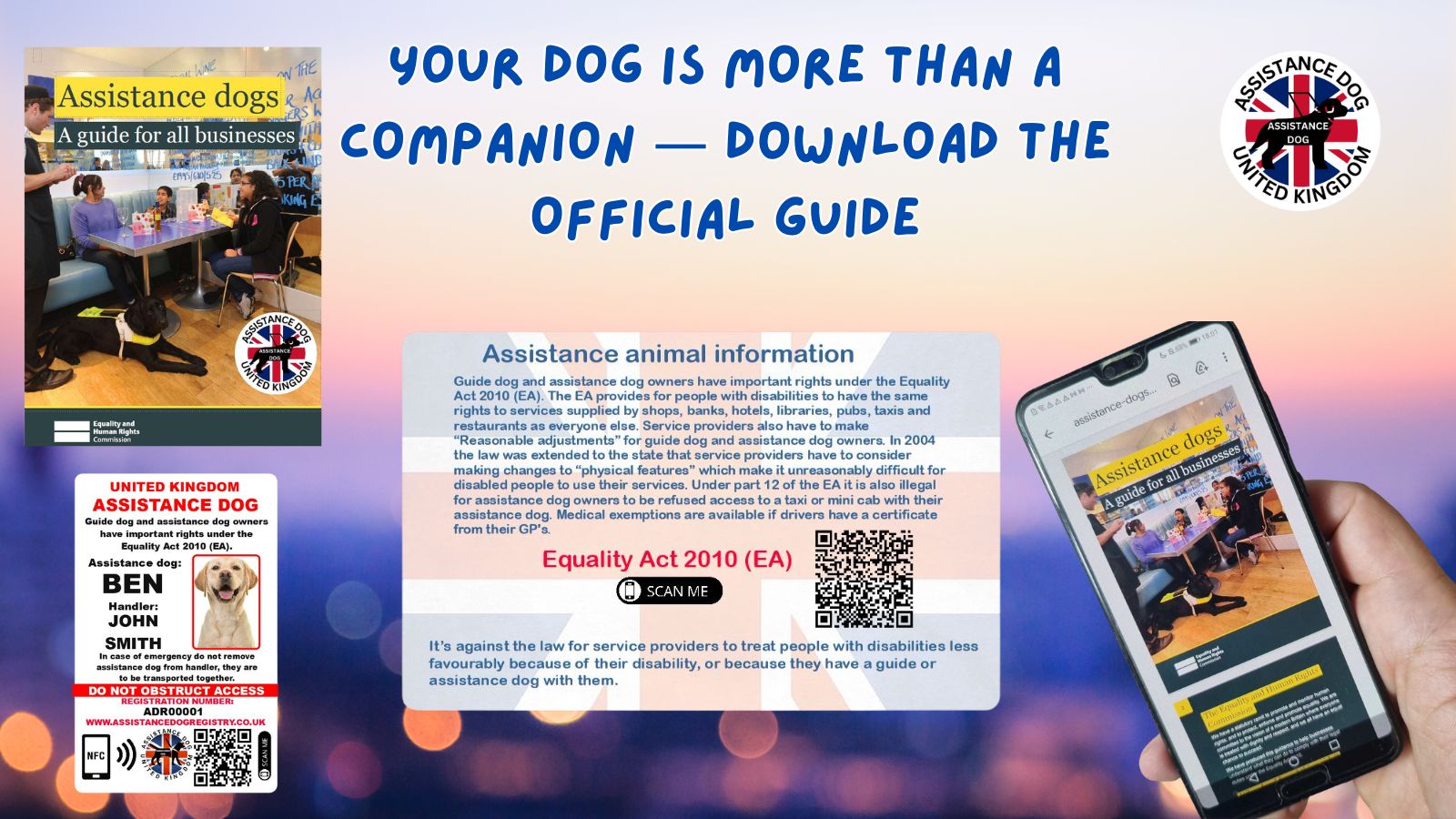
Download your free digital Assistance Dog Law Card See optional support tools
Our Assistance Dog Registry offers smart, professional tools to help you:

- Instantly show your dog’s role and legal rights with Smart ID Cards
- Provide staff with proof via a QR Code linked to the Equality Act 2010
- Present your custom dog profile and handler details in seconds
- Wear your support gear with confidence (lanyard, dog tags, vest)
- Enjoy the benefits of voluntary registration that supports your rights without replacing or contradicting the law
Stay Confident
You deserve peace of mind when you're out enjoying the sunshine. With proper registration and public-friendly ID tools, you can confidently navigate the spaces where others still need educating.
Register your assistance dog today and enjoy every sunny moment without setbacks.
💡 Click here to learn more & register
FAQ
1. What is an assistance dog?
An assistance dog is trained to perform specific tasks to aid individuals with disabilities, enhancing their independence and quality of life.
2. Why is socialization important for assistance dogs?
Proper socialization ensures assistance dogs remain calm, focused, and well-behaved in various public settings, enabling them to perform their duties effectively.
3. At what age should I start socializing my assistance dog?
It's beneficial to begin socialization during puppyhood; however, with patience and consistent training, dogs of any age can learn to navigate public environments confidently.
4. How long does it take to socialize an assistance dog?
The duration varies based on the dog's temperament, previous experiences, and the consistency of training. Regular, positive exposure to different environments is key.
5. Can I socialize my assistance dog if they are older?
Yes, older dogs can be socialized successfully. While it may require more time and patience, with positive reinforcement, they can adapt to new situations.
6. What should I do if my assistance dog shows fear in public?
If your dog exhibits fear, calmly remove them from the situation and gradually reintroduce the stimulus at a comfortable distance, rewarding calm behavior.
7. How do I handle public distractions during training?
Teach focus commands like "watch me" to redirect your dog's attention. Gradual exposure to distractions, paired with positive reinforcement, can improve focus.
8. Are there specific public places ideal for socialization?
Begin with quiet areas like parks, then progress to busier environments such as cafes, public transport, and shopping centres as your dog becomes more comfortable.
9. How can I ensure my assistance dog behaves appropriately around other animals?
Controlled introductions and rewarding calm behaviour are essential. Consistent training helps your dog remain focused on their tasks, even around other animals.
10. What are the legal requirements for assistance dogs in public places?
In many regions, assistance dogs are permitted in public areas to support their handlers. It's important to familiarize yourself with local laws and regulations regarding assistance dogs.
Learn more about our Lifelong Partner Package
Learn More – Additional Assistance Dog Letter Templates
If you found this travel guide useful, you may also benefit from these other essential assistance dog letter templates we’ve published:
📌 Housing Accommodation Request Letter – Need to request reasonable accommodation from your landlord? This template ensures your rights under the Equality Act 2010 are respected.
📌 Workplace Assistance Dog Request Letter – If you need accommodations to bring your assistance dog to work, this letter outlines your legal rights and reasonable adjustments your employer should consider.
📌 Medical Confirmation of Need for an Assistance Dog – A doctor’s letter template to confirm your need for an assistance dog for public access, travel, and daily life.
🔹 More templates are coming soon! Let us know if you have specific needs, and we’ll create more resources to support assistance dog handlers.