Many people search online for how to register an assistance dog in the UK. In practice, the UK system is often misunderstood, which can lead to confusion, stress, and unnecessary conflict in public places.
This page explains how assistance dogs are legally recognised in the UK, whether registration is required, and what options exist for owner-trained assistance dogs under the Equality Act 2010.
This information is provided for educational purposes only and is intended to help disabled handlers understand their rights clearly, calmly, and accurately.
In the UK, there is no government-run or legally required registration system for assistance dogs.
Legal recognition does not come from registration, certificates, ID cards, or licences. It comes from the law.
When people ask about “registering” an assistance dog, they are usually looking for clarity about their rights and reassurance that their dog qualifies as an assistance dog.
While these concerns are understandable, registration itself is not a legal requirement in the UK.
No. Assistance dogs do not need to be registered by law in the UK.
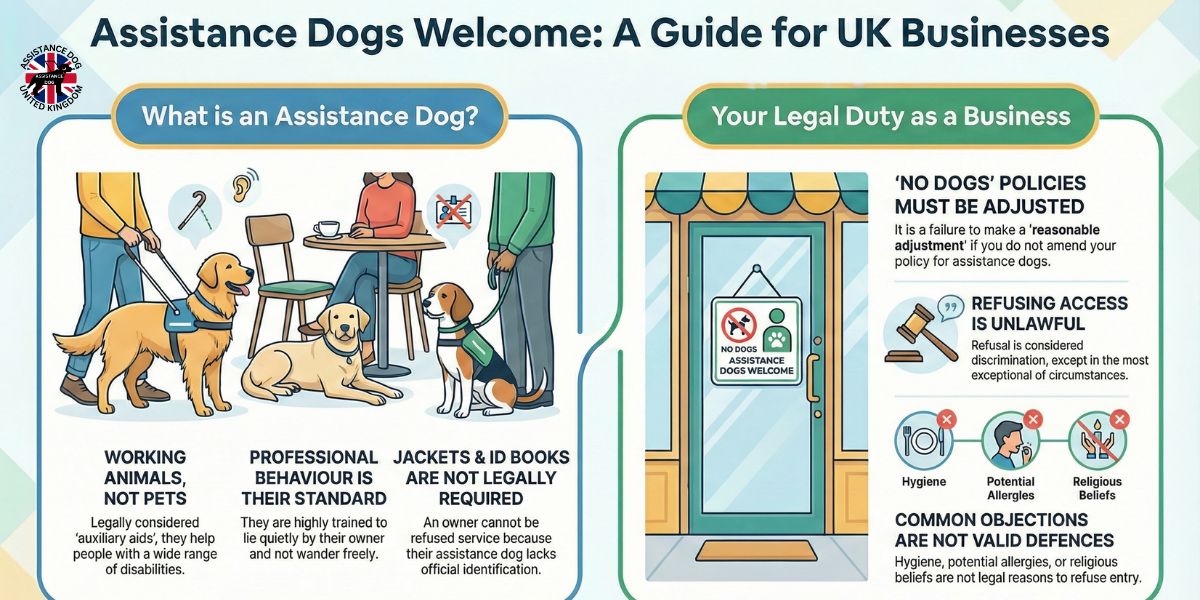
Under the Equality Act 2010, a disabled person has the right to be accompanied by an assistance dog in most public places. This right exists regardless of paperwork.
There is no legal requirement for:
Any organisation claiming that registration is legally required is incorrect.
In UK law, an assistance dog is recognised based on function, not paperwork.
An assistance dog is trained to assist a disabled person with the effects of their disability. This includes both visible and non-visible disabilities.
Owner-trained assistance dogs are legally valid. There is no requirement for training by a charity or organisation.
No. There is no official government assistance dog registry in the UK.
Some charities train and place assistance dogs and may keep internal records for their own dogs. These are not legal registries and do not control public access rights.
The Equality Act applies equally to both charity-trained and owner-trained assistance dogs.
A voluntary assistance dog registry is optional and exists to support handlers, not to grant legal rights.
Voluntary registration does not create legal rights, replace the Equality Act, or act as proof of disability.
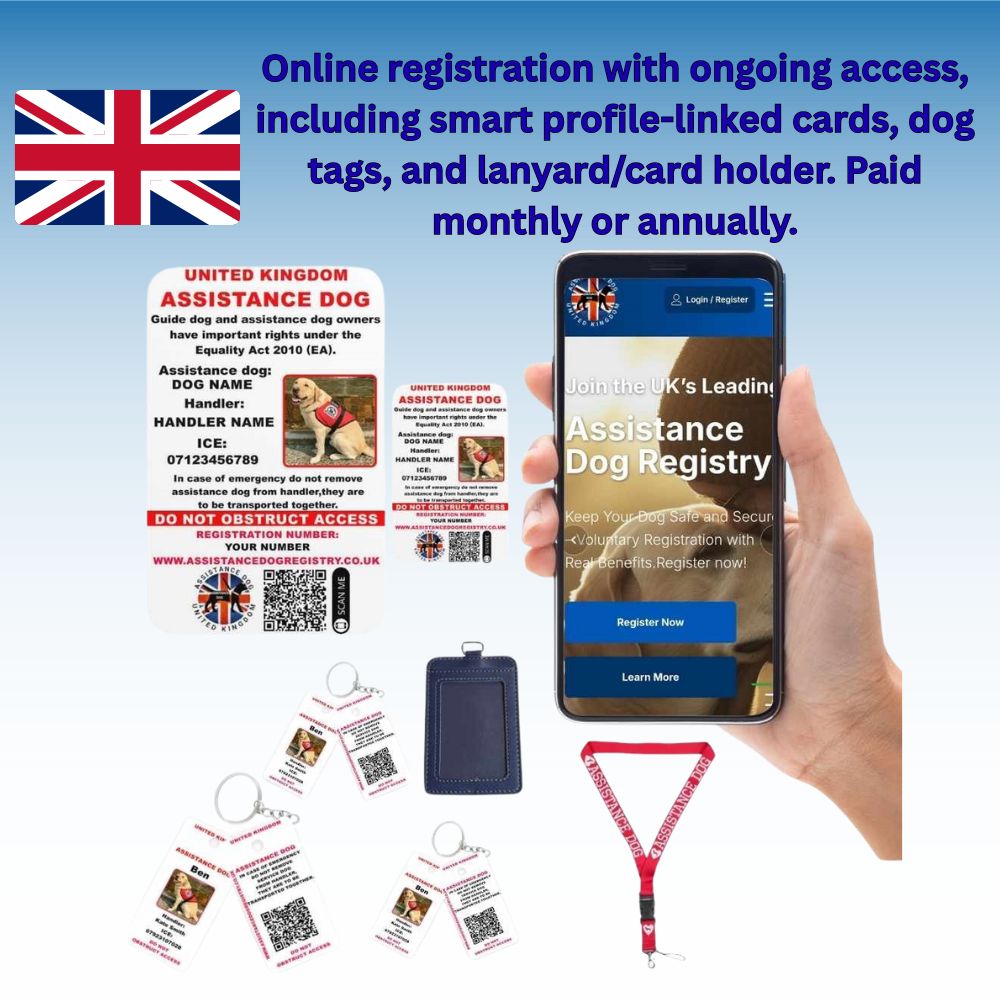
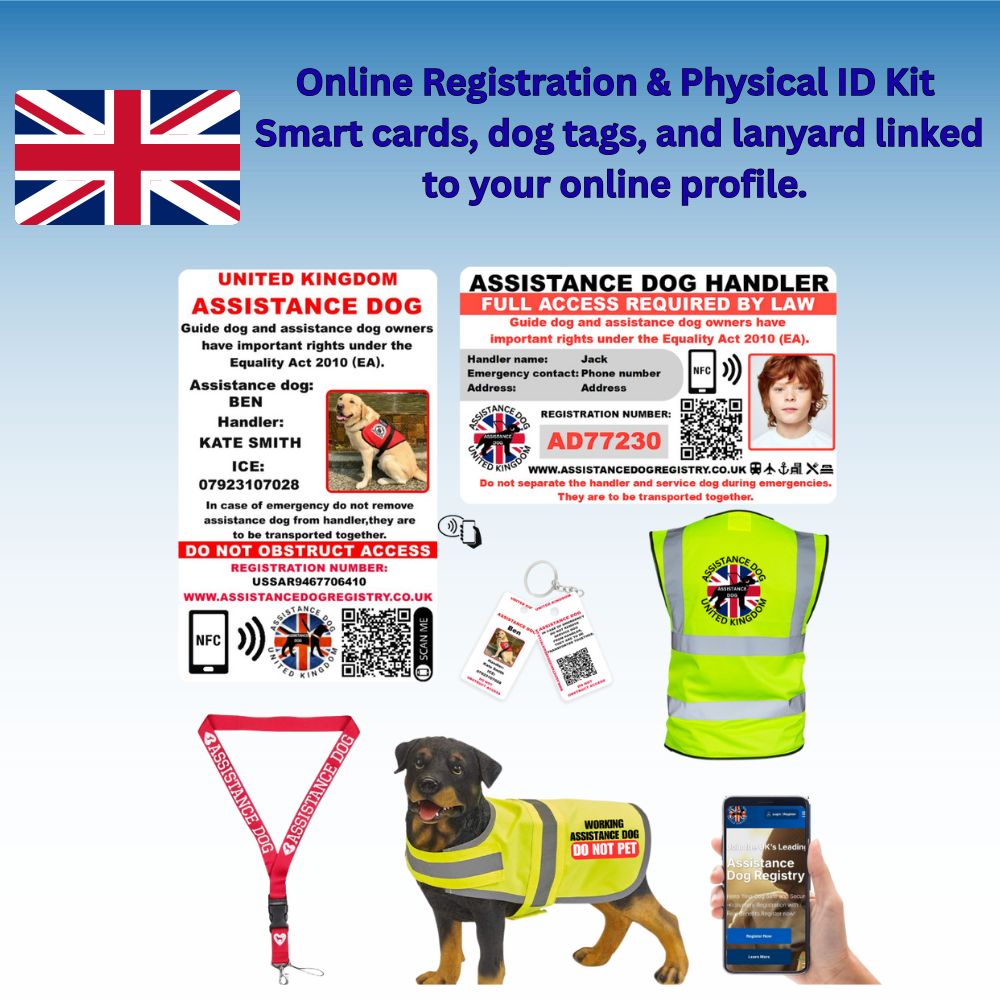
Although not legally required, some handlers choose to use voluntary documentation because it can help reduce repeated explanations and misunderstandings.
This may be particularly helpful for owner-trained assistance dogs and non-visible disabilities, where public awareness is often limited.
Documentation should always be viewed as a communication aid, not legal proof.
| Item | Required by UK Law |
|---|---|
| Assistance dog registration | No |
| ID card or certificate | No |
| Charity affiliation | No |
| Disclosure of medical details | No |
| Disability and assistance function | Yes |
A disabled person is not required to disclose private medical information in order to access their rights.
This is a common source of confusion.
In the UK, assistance dogs are protected under the Equality Act 2010. Emotional support animals (often referred to as ESAs) do not have automatic public access rights.
An emotional support dog may provide comfort, but unless the dog is trained to assist with the effects of a disability, it is not legally recognised as an assistance dog under UK law.
This distinction is particularly important because much online information reflects US law, which is different from UK legislation.
No. There is no legal requirement to carry documentation.
False. Owner-trained assistance dogs are equally valid.
Incorrect. Legal status comes from the Equality Act, not paperwork.
No. You are not required to disclose private medical details.
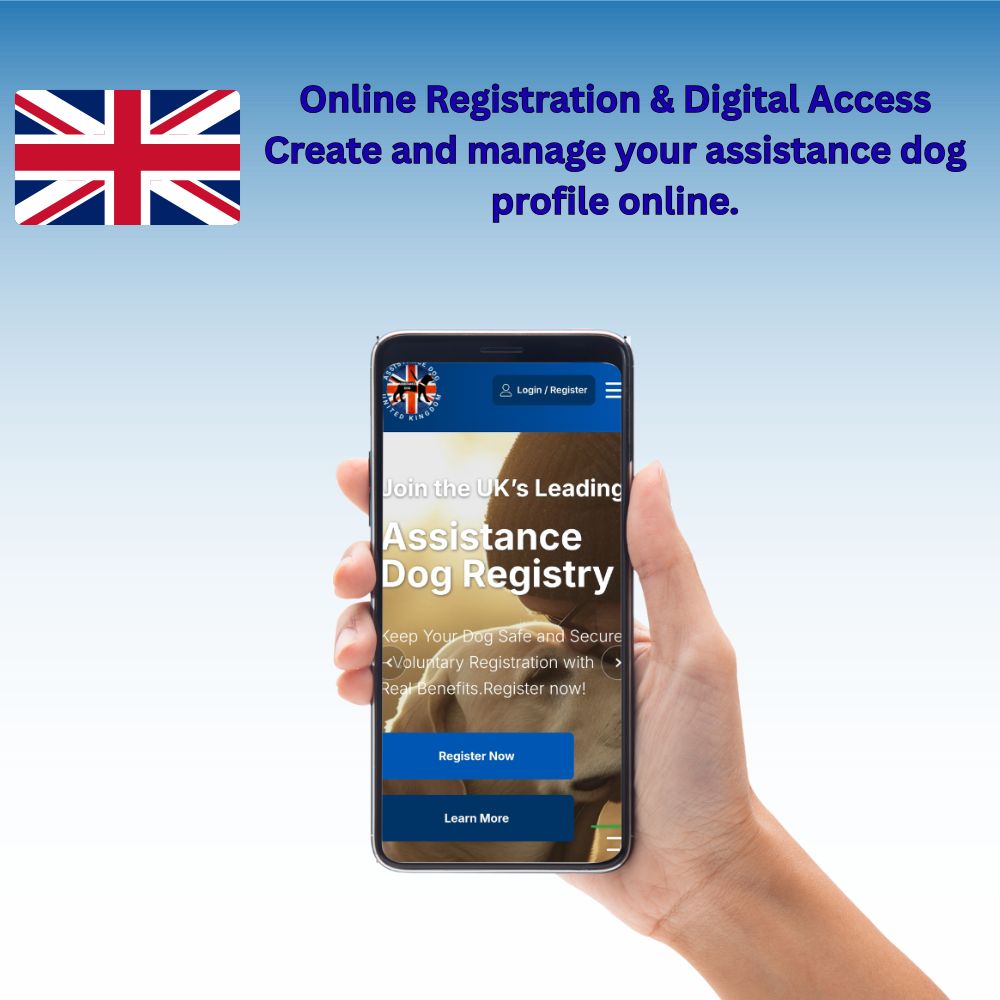
Assistance Dog Registry UK operates as a voluntary, education-focused service.
The platform is designed to support owner-trained assistance dog handlers by providing clear explanations of UK law and optional documentation for personal use.
Membership is optional and does not replace legal rights under the Equality Act 2010.
If you decide to use a voluntary registry, ensure it is transparent about UK law, does not claim to grant legal rights, respects privacy, and focuses on education rather than pressure.
Understanding your rights is always more important than paperwork.
Learn more about voluntary support options for assistance dog handlers.