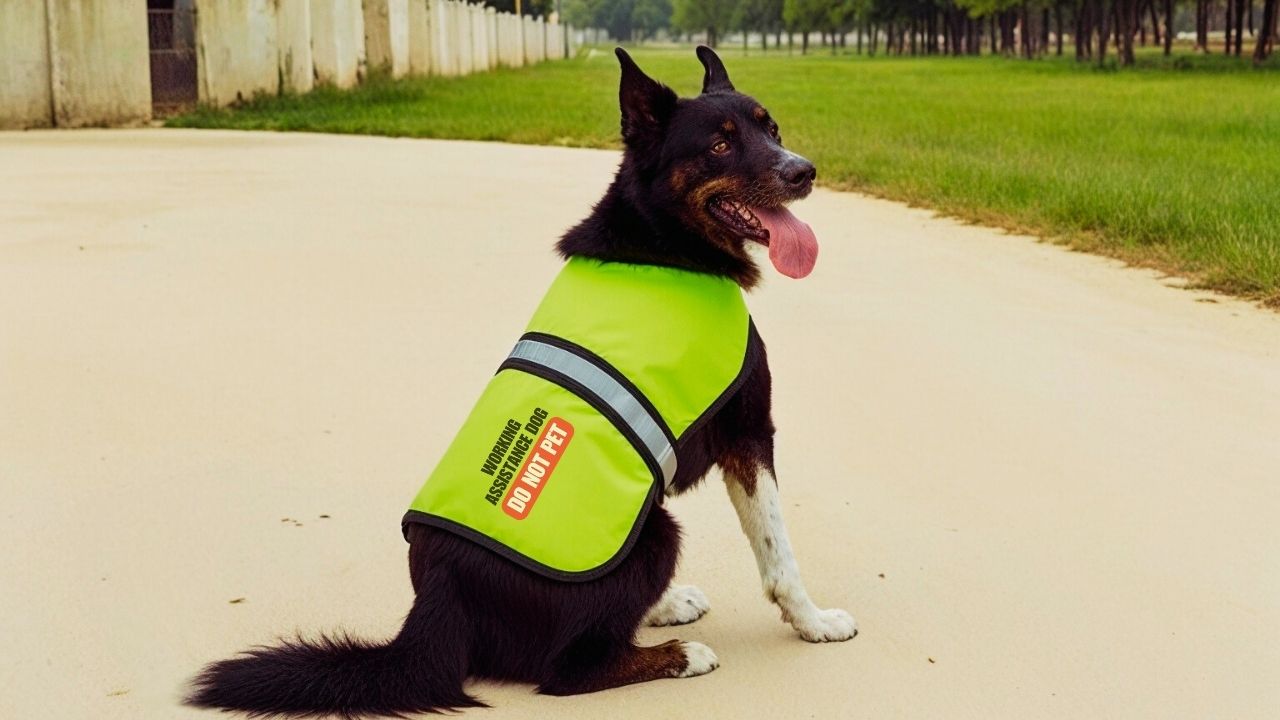
Every day across the UK, thousands of disabled people rely on their assistance dogs for independence, support, and safety. These dogs are more than companions — they are a vital part of daily life. But too often, handlers face confusion or even discrimination from businesses that don’t understand the law.
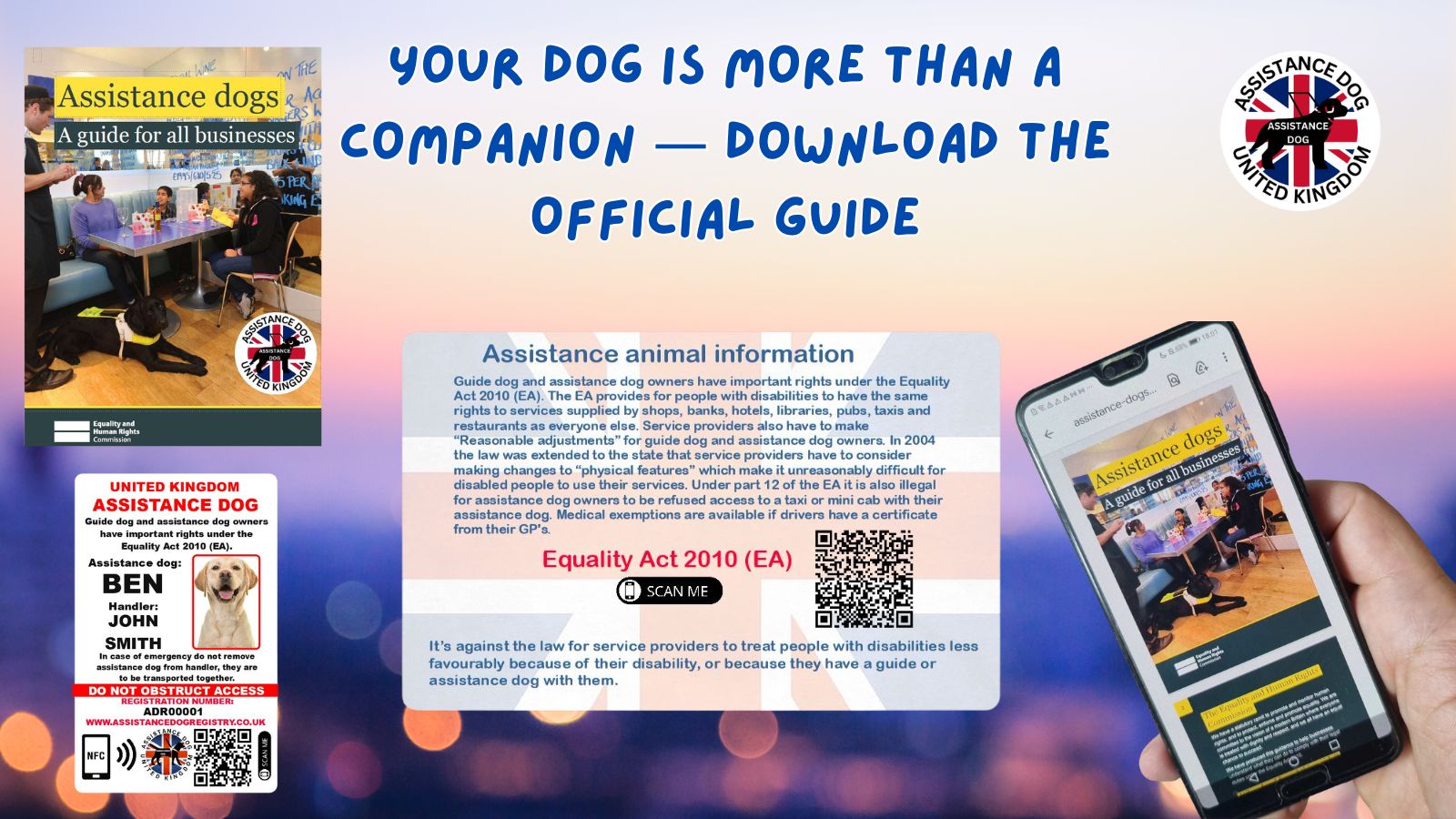
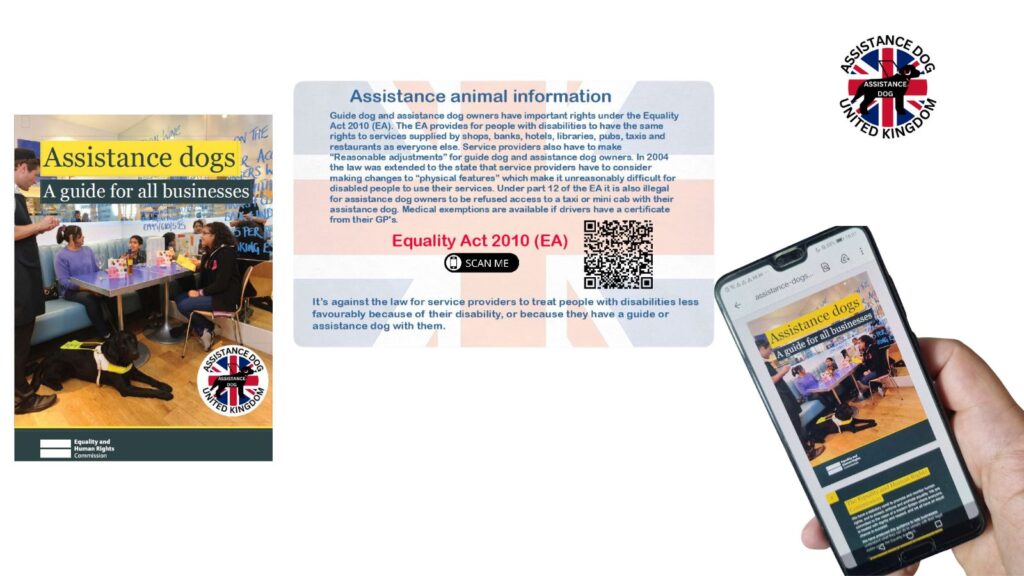
That’s why we’ve made an important upgrade to every Assistance Dog Registry ID card: a built-in QR code linking directly to the official Equality and Human Rights Commission guide, “Assistance Dogs: A Guide for All Businesses.”
This blog explains:
What’s inside that guide
Why we linked it to every card
How this empowers handlers
And why ID cards and vests — while not legally required — remain essential tools for real-world access
🧾 What Is the PDF Guide?
This downloadable PDF, created by the Equality and Human Rights Commission, explains in plain terms how businesses must treat assistance dog handlers under the Equality Act 2010.
It’s designed for staff at shops, restaurants, hotels, taxis, banks, and more. It explains their legal obligations and what happens when those aren’t met.
We know from experience that even well-trained assistance dogs are sometimes challenged in public spaces. Many business owners still falsely believe that:
Only guide dogs are legally recognized
Assistance dogs must be trained by a charity
An ID card or vest is required for legal access
All of this is incorrect. But we also know that the burden of educating others shouldn't fall on you in stressful moments.
That’s why we embedded this official guide into your card with a QR code. One quick scan — and you can show the business exactly what the law says.
🔍 What the Guide Actually Says
Let’s break down the most important sections of the Equality and Human Rights Commission’s official guide — and how they affect you.
✅ 1. Owner-Trained Assistance Dogs Are Legal
“Assistance dogs can also be owner trained and the owner selects their own dog to fit their own requirements.” (Page 5)
You are not legally required to use an Assistance Dogs UK (ADUK) member charity to train your dog. Owner-trained dogs — provided they are trained to behave properly in public — are equally protected under the Equality Act.
This is essential for people with non-visible disabilities, PTSD, mobility needs, or complex conditions not supported by charity waitlists.
✅ 2. ID Cards and Vests Are Optional — But Still Valuable
“The law does not require the dog to wear a harness or jacket... Some users carry ID books... Again, this is not a legal requirement and assistance dog users should not be refused a service simply because they do not possess an ID book.” (Page 5)
Here’s the truth: the law doesn’t require you to wear a vest or carry a card. But reality is different. Without visual identification, you may be challenged more often — leading to awkward or confrontational moments.
That’s why most handlers still choose to carry:
An ID card to show their rights
A high-visibility vest for clarity in public
Dog tags and QR links to make education easier
These aren’t legal requirements — they’re tools for smoother, stress-free experiences.
✅ 3. “No Dogs” Policies Are Not Valid
“A ‘no dogs’ policy will have a worse impact on disabled people using assistance dogs and could be indirect discrimination unless the policy can be objectively justified.” (Page 9)
This is one of the most misunderstood parts of the law. A business cannot use a “no dogs allowed” policy to refuse your entry. If they do, they could face legal claims under disability discrimination law.
Even if someone inside is allergic or has cultural concerns, the business must make reasonable adjustments — like separating seating — not banning you entirely
.
✅ 4. Emotional and Psychological Support Is Valid
“Assistance dogs... can also provide emotional and psychological wellbeing and improve the confidence of disabled people who use them.” (Page 12)
Mental health matters. Whether your dog helps with panic attacks, PTSD, autism, anxiety, or another condition — you are protected.
There is no law stating that emotional support is not valid if it relates to a diagnosed disability that impacts your daily life.
🛡️ How Our Cards and Vests Help
Limited Time: Save £30 on the Premium Assistance Dog Plan
Today, we honour the courage, sacrifice, and resilience of all who fought for freedom. VE Day reminds us that strength often comes in silence — and in the loyal companionship of those who walk beside us, human or canine. 🐾 To mark this important day, we're offering a special VE Day Discount for our Lifetime Assistance Dog Registration Package — a small way to honour big sacrifices. Use code VICTORY30 at checkout.
valid until:10thof May 2025
Now that you understand what’s legally required — here’s why thousands of handlers still choose our tools.
2. Why is socialization important for assistance dogs?
Proper socialization ensures assistance dogs remain calm, focused, and well-behaved in various public settings, enabling them to perform their duties effectively.
3. At what age should I start socializing my assistance dog?
It's beneficial to begin socialization during puppyhood; however, with patience and consistent training, dogs of any age can learn to navigate public environments confidently.
4. How long does it take to socialize an assistance dog?
The duration varies based on the dog's temperament, previous experiences, and the consistency of training. Regular, positive exposure to different environments is key.
5. Can I socialize my assistance dog if they are older?
Yes, older dogs can be socialized successfully. While it may require more time and patience, with positive reinforcement, they can adapt to new situations.
6. What should I do if my assistance dog shows fear in public?
If your dog exhibits fear, calmly remove them from the situation and gradually reintroduce the stimulus at a comfortable distance, rewarding calm behavior.
7. How do I handle public distractions during training?
Teach focus commands like "watch me" to redirect your dog's attention. Gradual exposure to distractions, paired with positive reinforcement, can improve focus.
8. Are there specific public places ideal for socialization?
Begin with quiet areas like parks, then progress to busier environments such as cafes, public transport, and shopping centres as your dog becomes more comfortable.
9. How can I ensure my assistance dog behaves appropriately around other animals?
Controlled introductions and rewarding calm behaviour are essential. Consistent training helps your dog remain focused on their tasks, even around other animals.
10. What are the legal requirements for assistance dogs in public places?
In many regions, assistance dogs are permitted in public areas to support their handlers. It's important to familiarize yourself with local laws and regulations regarding assistance dogs.
Learn More – Additional Assistance Dog Letter Templates
If you found this travel guide useful, you may also benefit from these other essential assistance dog letter templates we’ve published:
📌 Housing Accommodation Request Letter– Need to request reasonable accommodation from your landlord? This template ensures your rights under the Equality Act 2010 are respected.
📌 Workplace Assistance Dog Request Letter – If you need accommodations to bring your assistance dog to work, this letter outlines your legal rights and reasonable adjustments your employer should consider.
Assistance dog handlers often face comments that sting, drain confidence, or create pressure to “prove” something they should never have to prove. If you’ve ever walked away replaying a sentence in your head, this guide is for you.
Below are five common remarks people search for online, plus real-world scenarios and calm, factual responses you can use without oversharing personal information.
Short, calm phrases can reduce conflict and protect your energy.
1) “You don’t look disabled.”
This often happens quietly. You’re in a queue, or walking into a shop, and someone looks from your dog to you and back again. Then it lands:
“You don’t look disabled.”
In that moment, many handlers feel exposed like their body has failed an invisible test. Invisible disability is real, and it is common.
A calm response you can use
“Not all disabilities are visible.”
If you want a slightly firmer version
“Disability isn’t always visible.”
2) “Is that a real assistance dog?”
This one usually arrives with suspicion. A stranger or staff member pauses, watches your dog, and asks “real” as if you’re being audited in public.
“Is that a real assistance dog?”
It can feel like you’re being forced to defend your life, especially when you’re already managing anxiety, overwhelm, or fatigue.
A calm response you can use
“Yes. My dog assists me with my disability.”
Keep it simple. You’re stating function, not inviting debate.
3) “We don’t allow dogs in here.”
This is the moment many handlers dread: you’ve already entered the space, you’re trying to stay regulated, and someone approaches with a rule meant for pets.
“Sorry, we don’t allow dogs.”
Even when you know your rights, being challenged can spike stress fast especially if the interaction is public, loud, or confrontational.
A calm response you can use
“Assistance dogs are legally allowed to accompany their handler.”
If the person seems open to learning, you can add one short line: “This is different from pet access.”
This one often comes from staff trying to “follow policy” — but it still creates pressure. You might hear it at a reception desk, a restaurant entrance, or during a tense moment at the till.
“Do you have ID?”
The hardest part isn’t the question. It’s the feeling that access depends on paperwork — when you’re already stretched thin.
A calm response you can use
“There’s no legal requirement for ID for assistance dogs in the UK.”
If you want to keep it cooperative: “I’m happy to explain the guidance if it helps.”
5) “That’s just an emotional support dog.”
This one can feel dismissive. Sometimes it’s said with a shrug, sometimes with an eye-roll, and it can instantly make a handler feel small.
“That’s just an emotional support dog.”
Labels get messy online. The simplest way to stay grounded is to bring the conversation back to what your dog does.
A calm response you can use
“My dog is trained to assist with my disability.”
No argument. No defence. Just function.
A calmer way to handle these moments
You are never required to share private medical details. Your rights exist regardless of whether you carry paperwork.
That said, many handlers choose optional support tools (like a short law summary card or profile) because it can reduce stressful back-and-forth and help the law speak for itself when words are hard to find.
It’s always optional. The goal is relief, not permission.
Wear your support gear with confidence (lanyard, dog tags, vest)
Enjoy the benefits of voluntary registration that supports your rights without replacing or contradicting the law
Stay Confident
You deserve peace of mind when you're out enjoying the sunshine. With proper registration and public-friendly ID tools, you can confidently navigate the spaces where others still need educating.
Register your assistance dog today and enjoy every sunny moment without setbacks.
2. Why is socialization important for assistance dogs?
Proper socialization ensures assistance dogs remain calm, focused, and well-behaved in various public settings, enabling them to perform their duties effectively.
3. At what age should I start socializing my assistance dog?
It's beneficial to begin socialization during puppyhood; however, with patience and consistent training, dogs of any age can learn to navigate public environments confidently.
4. How long does it take to socialize an assistance dog?
The duration varies based on the dog's temperament, previous experiences, and the consistency of training. Regular, positive exposure to different environments is key.
5. Can I socialize my assistance dog if they are older?
Yes, older dogs can be socialized successfully. While it may require more time and patience, with positive reinforcement, they can adapt to new situations.
6. What should I do if my assistance dog shows fear in public?
If your dog exhibits fear, calmly remove them from the situation and gradually reintroduce the stimulus at a comfortable distance, rewarding calm behavior.
7. How do I handle public distractions during training?
Teach focus commands like "watch me" to redirect your dog's attention. Gradual exposure to distractions, paired with positive reinforcement, can improve focus.
8. Are there specific public places ideal for socialization?
Begin with quiet areas like parks, then progress to busier environments such as cafes, public transport, and shopping centres as your dog becomes more comfortable.
9. How can I ensure my assistance dog behaves appropriately around other animals?
Controlled introductions and rewarding calm behaviour are essential. Consistent training helps your dog remain focused on their tasks, even around other animals.
10. What are the legal requirements for assistance dogs in public places?
In many regions, assistance dogs are permitted in public areas to support their handlers. It's important to familiarize yourself with local laws and regulations regarding assistance dogs.
Learn More – Additional Assistance Dog Letter Templates
If you found this travel guide useful, you may also benefit from these other essential assistance dog letter templates we’ve published:
📌 Housing Accommodation Request Letter– Need to request reasonable accommodation from your landlord? This template ensures your rights under the Equality Act 2010 are respected.
📌 Workplace Assistance Dog Request Letter – If you need accommodations to bring your assistance dog to work, this letter outlines your legal rights and reasonable adjustments your employer should consider.
Always carry fresh, cool water for your dog—whether you're out for errands, training, or just a walk. 💧 Pro tip: Use a collapsible water bowl for easy access.
2️⃣ Watch Out for Hot Surfaces
Pavements and sand can burn your dog’s paws. Test the surface with your hand: if it’s too hot for you, it’s too hot for them. 🐾 Try walking during cooler hours—early mornings or evenings.
3️⃣ Keep Cool Indoors
Ensure your dog has a shady, well-ventilated space at home. Fans, cooling mats, or damp towels can help. ❄️ Never leave your dog in a parked car—temperatures rise fast, even with windows cracked.
4️⃣ Sun Protection Matters
Light-coloured or short-haired dogs can get sunburnt. Pet-safe sunscreen on their nose, ears, and belly can prevent burns.
5️⃣ Watch for Signs of Heatstroke
Be alert for:
Excessive panting or drooling
Lethargy
Vomiting
Weakness If you spot any of these, seek vet care immediately.
🎒 Don’t Forget Identification
Always make sure your dog wears their ID tag and carries their Assistance Dog ID Card.
Emergencies can happen, and proper identification helps keep your team together.
✅ Quick Checklist for Summer Outings:
🧴 Water & collapsible bowl
🐶 Cooling vest or mat
🦴 Treats (heat-safe)
🪪 Assistance Dog ID & Emergency Info
🧢 Optional: Dog-safe sunscreen & paw balm
💡 Final Tip:
Every dog is different. Monitor your dog closely and adjust your plans based on their needs and the day’s conditions.
Our Assistance Dog Registry offers smart, professional tools to help you:
Instantly show your dog’s role and legal rights with Smart ID Cards
Provide staff with proof via a QR Code linked to the Equality Act 2010
Wear your support gear with confidence (lanyard, dog tags, vest)
Enjoy the benefits of voluntary registration that supports your rights without replacing or contradicting the law
Stay Confident This Summer
You deserve peace of mind when you're out enjoying the sunshine. With proper registration and public-friendly ID tools, you can confidently navigate the spaces where others still need educating.
Register your assistance dog today and enjoy every sunny moment without setbacks.
2. Why is socialization important for assistance dogs?
Proper socialization ensures assistance dogs remain calm, focused, and well-behaved in various public settings, enabling them to perform their duties effectively.
3. At what age should I start socializing my assistance dog?
It's beneficial to begin socialization during puppyhood; however, with patience and consistent training, dogs of any age can learn to navigate public environments confidently.
4. How long does it take to socialize an assistance dog?
The duration varies based on the dog's temperament, previous experiences, and the consistency of training. Regular, positive exposure to different environments is key.
5. Can I socialize my assistance dog if they are older?
Yes, older dogs can be socialized successfully. While it may require more time and patience, with positive reinforcement, they can adapt to new situations.
6. What should I do if my assistance dog shows fear in public?
If your dog exhibits fear, calmly remove them from the situation and gradually reintroduce the stimulus at a comfortable distance, rewarding calm behavior.
7. How do I handle public distractions during training?
Teach focus commands like "watch me" to redirect your dog's attention. Gradual exposure to distractions, paired with positive reinforcement, can improve focus.
8. Are there specific public places ideal for socialization?
Begin with quiet areas like parks, then progress to busier environments such as cafes, public transport, and shopping centres as your dog becomes more comfortable.
9. How can I ensure my assistance dog behaves appropriately around other animals?
Controlled introductions and rewarding calm behaviour are essential. Consistent training helps your dog remain focused on their tasks, even around other animals.
10. What are the legal requirements for assistance dogs in public places?
In many regions, assistance dogs are permitted in public areas to support their handlers. It's important to familiarize yourself with local laws and regulations regarding assistance dogs.
Learn More – Additional Assistance Dog Letter Templates
If you found this travel guide useful, you may also benefit from these other essential assistance dog letter templates we’ve published:
📌 Housing Accommodation Request Letter– Need to request reasonable accommodation from your landlord? This template ensures your rights under the Equality Act 2010 are respected.
📌 Workplace Assistance Dog Request Letter – If you need accommodations to bring your assistance dog to work, this letter outlines your legal rights and reasonable adjustments your employer should consider.
I remember the day so clearly. My heart was racing as I stood outside the small corner shop with Daisy, my black and tan dog, sitting patiently by my side. She looked up at me with her gentle eyes, sensing my nerves. This was our first real test together. After months of training Daisy to be my assistance dog, today was the day we would finally step into the world as a team.
Daisy wasn’t professionally trained by an organization. I had trained her myself, from the ground up. Every sit, stay, and gentle lead through busy streets had been a journey we shared. And though I knew she was ready, I was terrified. What if they didn’t let us in? What if someone challenged me?
But we were prepared. I had registered Daisy with the Assistance Dog Registry and received our bright yellow high-visibility vest and her personalized ID card. These weren’t just accessories to me. They were our shield against doubt—a visual reassurance to the world that Daisy was more than a pet; she was my support, my freedom.
Taking a deep breath, I stepped through the door. Immediately, I saw the shop assistant glance at Daisy. Her expression shifted from neutral to uncertain. “Excuse me, you can’t bring dogs in here,” she said.
My stomach knotted. This was exactly what I feared. But I had rehearsed this moment in my mind so many times. I smiled, though my voice trembled slightly. “She’s my assistance dog. She’s trained to support me.”
The assistant hesitated, clearly unsure. I reached for Daisy’s ID card, attached neatly to my lanyard. I showed it to her, pointing to the legal information printed on the back. “Under the Equality Act, she has the right to accompany me in public spaces,” I explained.
I watched the assistant’s eyes scan the card, then flick back to Daisy’s vest, which clearly read “Assistance Dog” in bold letters. Relief softened her features. “Oh, I didn’t realize. Of course, you’re welcome,” she said.
That simple exchange might seem small to others, but to me, it was monumental. It was the difference between feeling excluded and feeling human. The vest and ID card didn’t just open a door to the shop; they opened a door to my confidence.
From that day forward, everything changed. I no longer left home fearing confrontation. I knew Daisy and I had the tools to handle it. We were seen, understood, and respected.
Training my own assistance dog was a hard journey, but registering with the Assistance Dog Registry was the final step that made it all come together. That first shop visit proved to me that we were ready for the world—and that the world was ready for us.
To provide the best experiences, we use technologies like cookies to store and/or access device information. Consenting to these technologies will allow us to process data such as browsing behavior or unique IDs on this site. Not consenting or withdrawing consent, may adversely affect certain features and functions.
Functional
Always active
The technical storage or access is strictly necessary for the legitimate purpose of enabling the use of a specific service explicitly requested by the subscriber or user, or for the sole purpose of carrying out the transmission of a communication over an electronic communications network.
Preferences
The technical storage or access is necessary for the legitimate purpose of storing preferences that are not requested by the subscriber or user.
Statistics
The technical storage or access that is used exclusively for statistical purposes.The technical storage or access that is used exclusively for anonymous statistical purposes. Without a subpoena, voluntary compliance on the part of your Internet Service Provider, or additional records from a third party, information stored or retrieved for this purpose alone cannot usually be used to identify you.
Marketing
The technical storage or access is required to create user profiles to send advertising, or to track the user on a website or across several websites for similar marketing purposes.