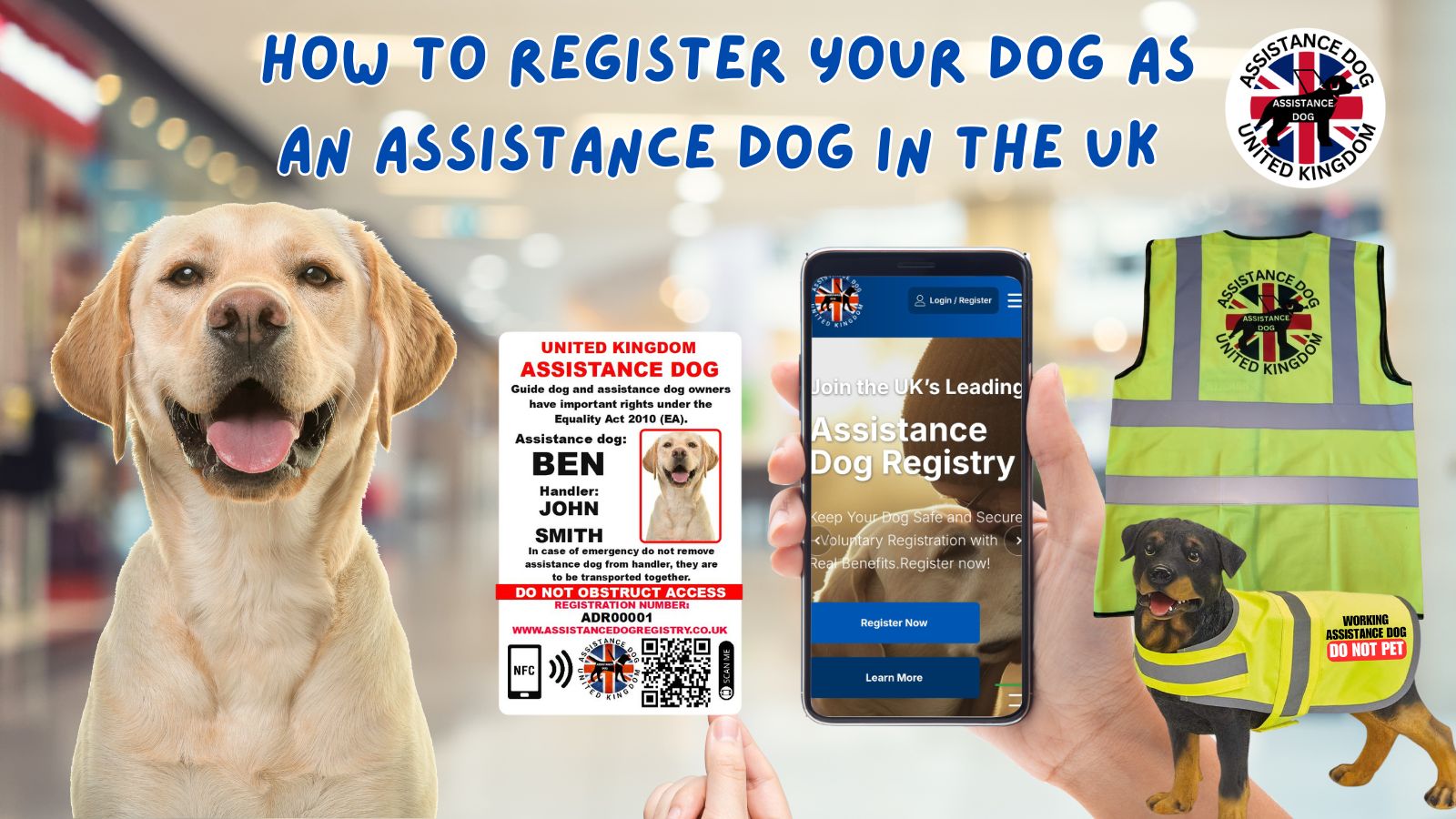
How to Register Your Dog as an Assistance Dog in the UK
Have you ever wondered whether you can register your dog as an assistance dog in the United Kingdom?
You’re not alone. Many people—especially those living with invisible disabilities—rely on their dogs for daily support but don’t know where to start when it comes to formal recognition.
The good news is, the UK legal system already supports you more than you might think. And while there’s no official government register for assistance dogs, you can take steps to validate your dog’s role and protect your rights when accessing public places, shops, transport, and services.
In this blog, we’ll walk you through how to register your dog as an assistance dog, the legal framework behind it, and why many owners choose voluntary ID and registration options for peace of mind.
Understanding Assistance Dog Rights Under UK Law
Let’s start with the foundation: the Equality Act 2010. This legislation protects people with disabilities from discrimination and ensures they have equal access to goods, services, and facilities—including with their assistance dog.
Under this law:
- You are not required to get your dog from a specific charity or organization.
- There is no legal requirement to pass a formal test or certification.
- You have a right to train your own dog, as long as it performs tasks that support your disability.
This may surprise some people. A lot of misinformation floats around online, and even some businesses believe only guide dogs or charity-issued dogs are legitimate. That’s simply not true under UK law.
Can I Train My Own Assistance Dog?
Yes, absolutely. In fact, many owners train their dogs themselves or work with professional dog trainers to create a plan tailored to their specific needs.
You know your condition better than anyone else. Whether your dog is trained to interrupt panic attacks, alert to sounds, assist with mobility, or provide grounding during episodes of PTSD—what matters is that they perform a task that directly helps you manage your disability.
There’s no government-issued test or license. What matters is the dog’s behaviour and training—especially in public.
So... No Certification At All?
Correct. There’s no official registry run by the government. But that doesn’t mean carrying proof isn’t helpful.
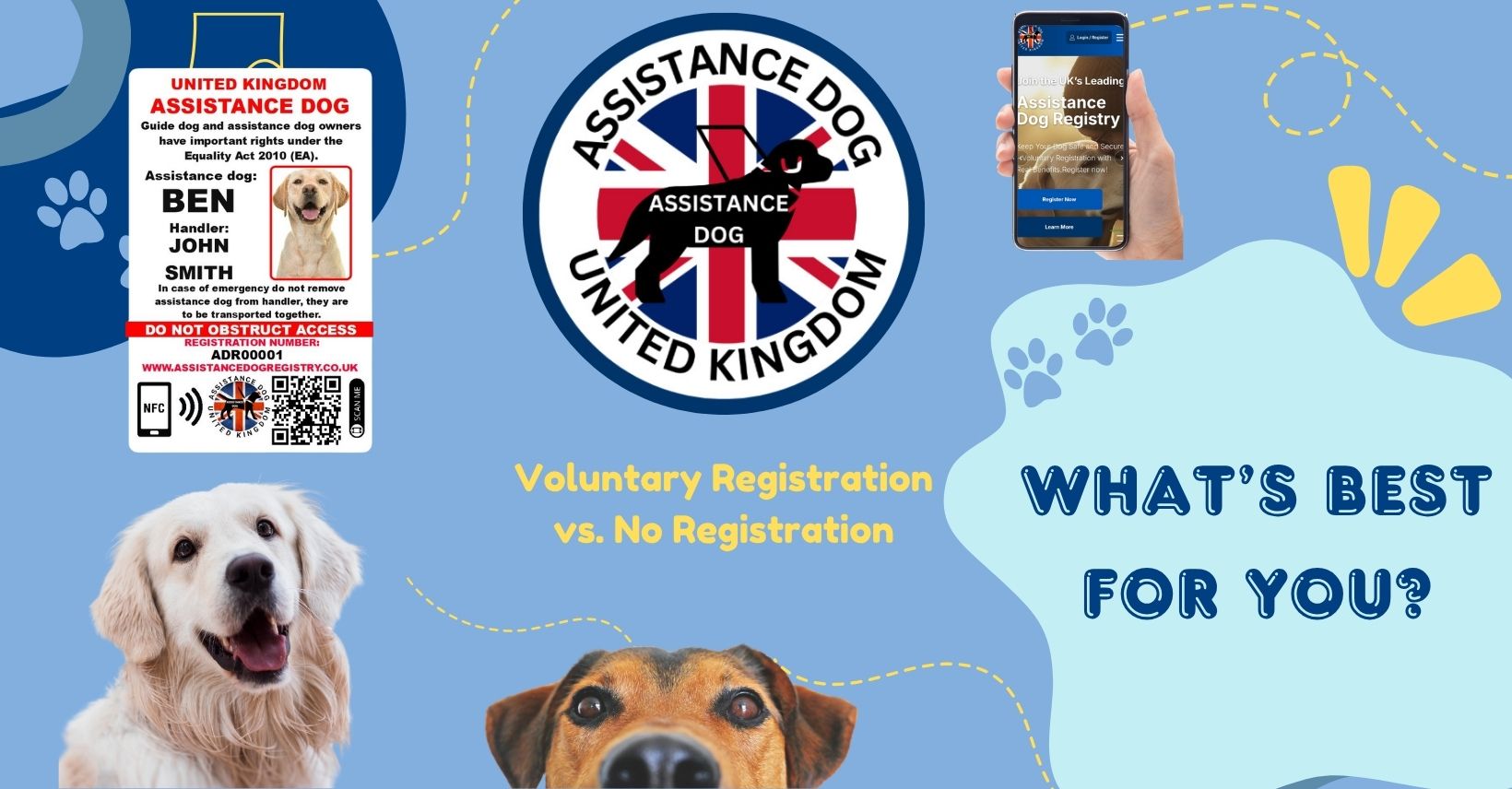
Many owners opt to use voluntary assistance dog ID cards, high-visibility vests, and NFC/QR code-linked profiles from reputable registries like ours at assistancedogregistry.co.uk. These tools provide:
- Peace of mind when accessing public places
- An easy way to explain your dog’s role to businesses or the public
- A sense of security, especially for those with social anxiety or hidden disabilities
- Emergency contact information, medical notes, and verification features linked to your dog’s profile
What Makes a Dog an “Assistance Dog”?
In the UK, an assistance dog is defined as a dog that has been trained to help a person with a disability. This help can be physical (mobility support), sensory (hearing or sight alerts), mental health-based (emotional regulation, panic interruption), or even a combination.
Examples of trained tasks include:
- Picking up dropped items
- Interrupting flashbacks or meltdowns
- Providing balance or mobility support
- Alerting to sounds or medical events
If your dog performs tasks that directly help you manage your condition, they can qualify as an assistance dog under the Equality Act.
Step-by-Step: How to Register with a Voluntary Registry
Since there’s no government-run process, the steps below explain how to take the most meaningful action to validate your dog’s status:
✅ Step 1: Make Sure Your Dog Is Well-Trained
Even without a formal test, you want to make sure your dog is calm, non-aggressive, responsive to commands, and well-behaved in public.
If you're still in training, that's okay too—as long as you're actively working on it.
✅ Step 2: Choose a Trusted Voluntary Registry
Registries like assistancedogregistry.co.uk provide custom ID cards, dog tags, online profiles, and more.
What you get:
- ID cards for your dog (and optional handler card)
- Dog tag with NFC/QR code
- A private profile that stores information like emergency contact details, tasks performed, and medical notes
- Optional high-visibility vest

✅ Step 3: Complete the Online Application
This includes uploading your dog’s photo, adding your details, and describing the tasks your dog performs. You don’t need to submit medical records, but you’ll be asked to agree to a declaration that confirms your dog meets the legal criteria.
✅ Step 4: Choose a Package
You can select from digital-only options to physical packages including ID cards, tags, and lanyards. Many users choose the lifetime package to avoid recurring fees and benefit from free replacement cards if needed.
Why Register If It’s Not Required?
Great question. While not required by law, registration can:
- Prevent confrontation: Business owners are more likely to respect your rights if you present clear identification.
- Support training: Many public access issues arise during the training phase. An ID helps explain your dog’s role.
- Assist in emergencies: Emergency personnel can access your NFC/QR profile if something happens to you.
- Offer peace of mind: Especially for hidden disabilities like autism, anxiety, or PTSD, simply avoiding uncomfortable conversations can be worth it.
What If My Dog Is Still Young or in Training?
You can still register! Many owners register young dogs to help raise awareness early and ease access during the training period. It’s important that you continue working with your dog to ensure they remain well-behaved and responsive, but there’s no need to wait years before you get started.
Just be honest in your registration, and make sure your dog is wearing appropriate gear when in public.
Final Thoughts
Navigating assistance dog rights in the UK can be confusing—especially when businesses themselves aren’t fully informed. But don’t let that stop you. You have rights, and your dog plays a vital role in your independence and wellbeing.
At the Assistance Dog Registry, we’re here to support you with ID cards, tools, and resources that help bridge the gap between what the law allows—and what society expects.
Start your registration today and give your assistance dog the visibility they deserve.
✅ Ready to Register Your Dog?
Start your journey here-Create your profile. Order your card. Walk into public spaces with your head high.
🎟️ Sign Up for the Lifetime Package Today
💡 Click here to learn more & register
FAQ
1. What is an assistance dog?
An assistance dog is trained to perform specific tasks to aid individuals with disabilities, enhancing their independence and quality of life.
2. Why is socialization important for assistance dogs?
Proper socialization ensures assistance dogs remain calm, focused, and well-behaved in various public settings, enabling them to perform their duties effectively.
3. At what age should I start socializing my assistance dog?
It's beneficial to begin socialization during puppyhood; however, with patience and consistent training, dogs of any age can learn to navigate public environments confidently.
4. How long does it take to socialize an assistance dog?
The duration varies based on the dog's temperament, previous experiences, and the consistency of training. Regular, positive exposure to different environments is key.
5. Can I socialize my assistance dog if they are older?
Yes, older dogs can be socialized successfully. While it may require more time and patience, with positive reinforcement, they can adapt to new situations.
6. What should I do if my assistance dog shows fear in public?
If your dog exhibits fear, calmly remove them from the situation and gradually reintroduce the stimulus at a comfortable distance, rewarding calm behavior.
7. How do I handle public distractions during training?
Teach focus commands like "watch me" to redirect your dog's attention. Gradual exposure to distractions, paired with positive reinforcement, can improve focus.
8. Are there specific public places ideal for socialization?
Begin with quiet areas like parks, then progress to busier environments such as cafes, public transport, and shopping centres as your dog becomes more comfortable.
9. How can I ensure my assistance dog behaves appropriately around other animals?
Controlled introductions and rewarding calm behaviour are essential. Consistent training helps your dog remain focused on their tasks, even around other animals.
10. What are the legal requirements for assistance dogs in public places?
In many regions, assistance dogs are permitted in public areas to support their handlers. It's important to familiarize yourself with local laws and regulations regarding assistance dogs.
Learn more about our Lifelong Partner Package
Learn More – Additional Assistance Dog Letter Templates
If you found this travel guide useful, you may also benefit from these other essential assistance dog letter templates we’ve published:
📌 Housing Accommodation Request Letter – Need to request reasonable accommodation from your landlord? This template ensures your rights under the Equality Act 2010 are respected.
📌 Workplace Assistance Dog Request Letter – If you need accommodations to bring your assistance dog to work, this letter outlines your legal rights and reasonable adjustments your employer should consider.
📌 Medical Confirmation of Need for an Assistance Dog – A doctor’s letter template to confirm your need for an assistance dog for public access, travel, and daily life.
🔹 More templates are coming soon! Let us know if you have specific needs, and we’ll create more resources to support assistance dog handlers.