Why Some Assistance Dogs Are Turned Away – Don’t Let It Be You
For many assistance dog handlers, their dog is not just a companion but a vital support system that makes daily life more accessible and less stressful. However, despite legal protections, some handlers still face the distressing experience of being turned away from shops, cafes, or public spaces.
Why does this happen? More importantly, how can you ensure it doesn’t happen to you?
The Reality: Why Are Assistance Dogs Refused Entry?
While UK law is clear that assistance dogs have the right to accompany their handlers into public places under the Equality Act 2010, not everyone is aware of or respects this law. Businesses sometimes deny entry due to:
Lack of Awareness: Staff may not be trained or informed about assistance dog rights.
Confusion with Pet Policies: Some assume any dog, regardless of role, is not allowed.
Doubts About Legitimacy: If the dog is not wearing visible identification or the handler lacks proof, businesses may question the dog’s status.
The Emotional Impact on Handlers
Being refused entry can be deeply upsetting. It undermines your confidence, disrupts your day, and can feel like a personal attack. Many handlers report feeling humiliated or anxious about venturing out again.
Carrying an ID card that outlines your dog’s role and your legal rights offers quick proof.
A lanyard or badge can reinforce that you and your dog are a recognized team.
Real Stories: How Gear Changed Everything
Samantha, a handler from Manchester, recalls: “Before getting a vest and ID card, I was constantly questioned. Since registering with the Assistance Dog Registry and using their full kit, I feel confident. People see the vest, the ID, and there are no questions. I finally feel respected.”
Registration Isn’t Mandatory – But It Helps
It is important to note that there is no official or mandatory registration system in the UK for assistance dogs. However, having clear visual indicators, such as a registry ID card and vest, can drastically reduce confrontations.
Equip Yourself with Confidence
Our Lifelong Partner Package is designed to give you the tools to face public spaces confidently. It includes:
High-visibility vest
Two personalized ID cards
Dog tags
Lanyard and badge holder
These tools don’t grant legal status but serve as a visual reassurance to the public and businesses, helping to ensure you and your dog are welcomed, not questioned.
Your Rights Matter – Show Them
Don’t let lack of awareness or doubt ruin your day. Equip yourself and your dog with the gear that signals your rights loud and clear.
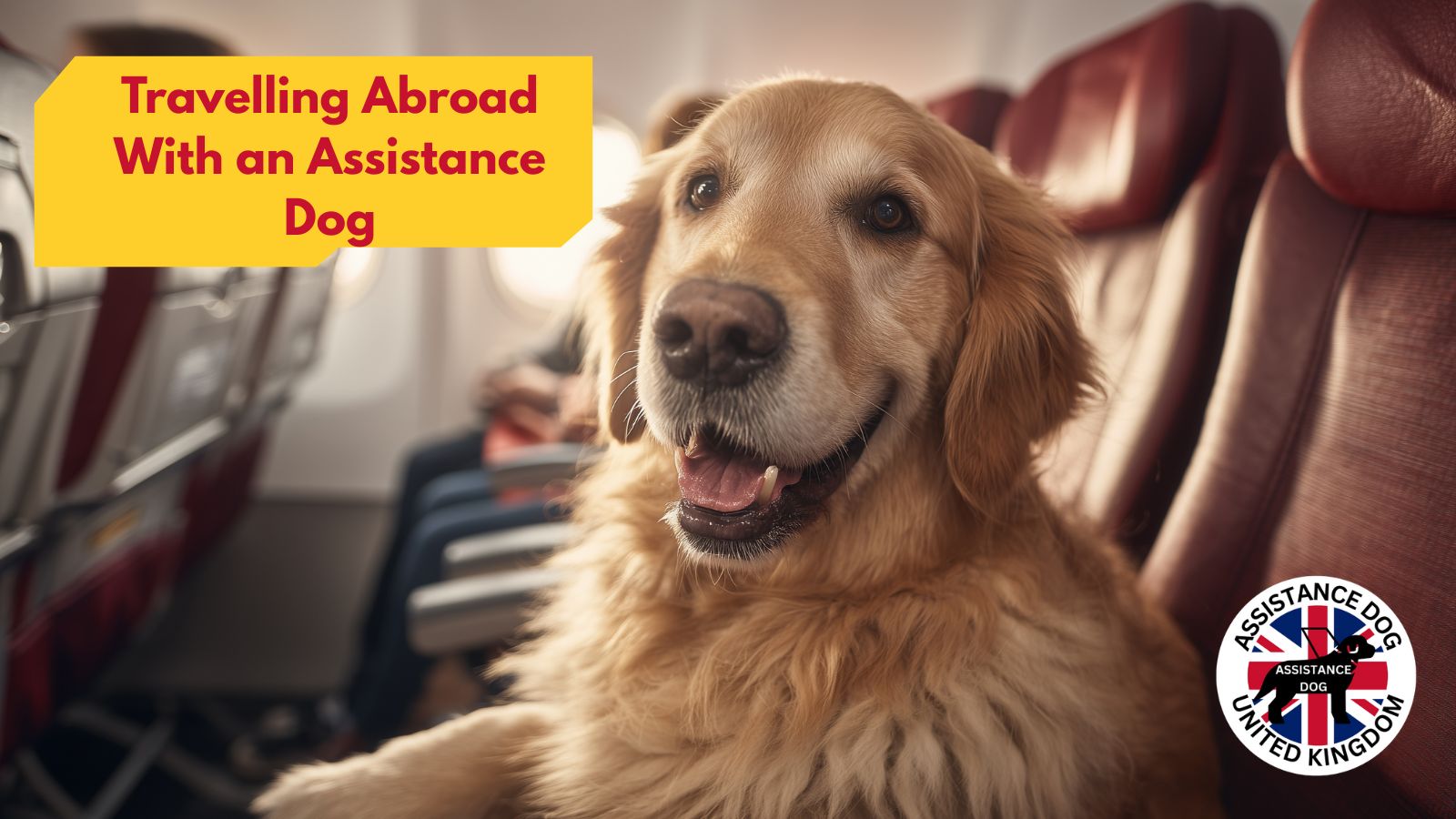
Travelling overseas with an assistance dog requires careful preparation. Rules for documentation, airline policies and border requirements apply to all dogs, even highly trained assistance animals. This guide summarises the essential information from GoCompare’s 2025 pet travel update, adapted specifically for UK assistance dog handlers.
Why Assistance Dogs Need Their Own Travel Insurance
Your personal travel insurance does not cover your assistance dog’s medical needs abroad. Even the best-trained dogs can experience unexpected health issues while travelling, so having proper cover is important.
Travel insurance for dogs can help with:
Emergency vet treatment overseas
Changes to travel plans caused by illness or injury
Lost, stolen or damaged travel documents (e.g., Animal Health Certificate)
Emergency repatriation back to the UK
Extra accommodation and travel costs if your dog cannot travel as planned
Holiday cancellation if your assistance dog needs urgent treatment
While there is no legal requirement for pet travel insurance, it offers valuable protection and peace of mind.
Typical Travel Insurance Cover for Assistance Dogs
What is usually covered?
✔ Emergency vet bills abroad
✔ Quarantine fees if your dog becomes ill
✔ Replacement documents if lost or damaged
✔ Emergency flights or transport home
✔ Holiday cancellation due to your dog’s urgent medical needs
✔ Extra accommodation or transport if plans change unexpectedly
✔ Repeat tick or tapeworm treatment if your return is delayed
What is usually not covered?
✖ Travelling without correct documents (AHC, microchip, vaccinations)
✖ Pre-existing conditions not declared to the insurer
✖ Non-emergency treatment abroad
✖ Claims without proof of purchase or receipts
✖ Certain liability claims outside the UK
What Affects the Cost of Assistance Dog Travel Insurance?
Costs depend on:
Your dog’s breed and age
Existing medical conditions
Destination country
Length of trip
Policy limits and cover type
According to Defaqto data in the GoCompare report:
61% of pet insurance policies include overseas cover as standard
19% offer it as an optional add-on
Essential Preparation for Travelling With an Assistance Dog
1. Vaccinations at least 21 days before travel
Your dog must be microchipped and vaccinated against rabies.
2. Animal Health Certificate (AHC) within 10 days before entering the EU
An AHC is required for every journey from Great Britain to any EU country or Northern Ireland.
3. Pre-travel health check 1 month before travel
Your vet will assess whether your dog is fit to travel and whether any conditions need to be managed beforehand.
4. Review your insurance 1–2 months before departure
Check for:
Emergency vet fee limits
Quarantine cover
Emergency repatriation cover
Time limits for trips abroad
Pet Travel Scheme (PETS)
PETS allows dogs to travel without quarantine between participating countries.
Your assistance dog must have:
A microchip
A valid rabies vaccination
An Animal Health Certificate
Treatment for tapeworm/ticks depending on destination
Note: Great Britain pet passports are no longer valid for EU travel.
Airline Rules for Assistance Dogs
Most airlines allow registered assistance dogs to travel in the cabin at no additional cost. However, policies vary between carriers.
General airline rules:
Your dog may sit in the floor space by your feet
You must notify the airline before travelling
Additional seats may be required if extra space is needed
All health and travel documentation must be valid
Airlines that allow pets (and assistance dogs):
British Airways
Emirates
Lufthansa
TUI
Air France–KLM
Airlines that do not allow pets (but allow assistance dogs):
easyJet
Jet2
Ryanair
Eurostar, Ferry and Eurotunnel Travel
Eurostar
Pets not permitted
✔ Registered assistance dogs are allowed (book 24 hours in advance)
Ferries
Most allow assistance dogs free of charge
Dogs may stay with the handler in public areas
Some ferries provide pet lounges or kennels
Eurotunnel LeShuttle
Pets and assistance dogs allowed
Dogs stay in the car with you for the entire journey
Exercise areas available on both sides
Tips for Travelling With an Assistance Dog
Travelling by car
Keep your dog secure with a harness or crate
Ensure a comfortable temperature
Never leave your dog unattended in the vehicle
Travelling by plane
Use an airline-approved harness or lead
Book direct flights where possible
Avoid sedation unless your vet approves it
Stay calm — your dog senses your emotions
Travelling on public transport
Check each operator’s pet and assistance dog policy
Keep your dog close and under control
Choose quieter areas where possible
Special Considerations for Assistance Dogs
Assistance dogs are recognised differently from pets. Transport providers must make reasonable adjustments to support accessibility.
Most providers allow:
Free travel for your assistance dog
Access to public areas, cabins and lounges
Priority boarding or support if needed
Always notify the operator in advance for the smoothest experience.
Source Attribution
This article is an adapted summary tailored for assistance dog handlers. It is based on the original GoCompare guide:
Wear your support gear with confidence (lanyard, dog tags, vest)
Enjoy the benefits of voluntary registration that supports your rights without replacing or contradicting the law
Stay Confident
You deserve peace of mind when you're out enjoying the sunshine. With proper registration and public-friendly ID tools, you can confidently navigate the spaces where others still need educating.
Register your assistance dog today and enjoy every sunny moment without setbacks.
2. Why is socialization important for assistance dogs?
Proper socialization ensures assistance dogs remain calm, focused, and well-behaved in various public settings, enabling them to perform their duties effectively.
3. At what age should I start socializing my assistance dog?
It's beneficial to begin socialization during puppyhood; however, with patience and consistent training, dogs of any age can learn to navigate public environments confidently.
4. How long does it take to socialize an assistance dog?
The duration varies based on the dog's temperament, previous experiences, and the consistency of training. Regular, positive exposure to different environments is key.
5. Can I socialize my assistance dog if they are older?
Yes, older dogs can be socialized successfully. While it may require more time and patience, with positive reinforcement, they can adapt to new situations.
6. What should I do if my assistance dog shows fear in public?
If your dog exhibits fear, calmly remove them from the situation and gradually reintroduce the stimulus at a comfortable distance, rewarding calm behavior.
7. How do I handle public distractions during training?
Teach focus commands like "watch me" to redirect your dog's attention. Gradual exposure to distractions, paired with positive reinforcement, can improve focus.
8. Are there specific public places ideal for socialization?
Begin with quiet areas like parks, then progress to busier environments such as cafes, public transport, and shopping centres as your dog becomes more comfortable.
9. How can I ensure my assistance dog behaves appropriately around other animals?
Controlled introductions and rewarding calm behaviour are essential. Consistent training helps your dog remain focused on their tasks, even around other animals.
10. What are the legal requirements for assistance dogs in public places?
In many regions, assistance dogs are permitted in public areas to support their handlers. It's important to familiarize yourself with local laws and regulations regarding assistance dogs.
Learn More – Additional Assistance Dog Letter Templates
If you found this travel guide useful, you may also benefit from these other essential assistance dog letter templates we’ve published:
📌 Housing Accommodation Request Letter– Need to request reasonable accommodation from your landlord? This template ensures your rights under the Equality Act 2010 are respected.
📌 Workplace Assistance Dog Request Letter – If you need accommodations to bring your assistance dog to work, this letter outlines your legal rights and reasonable adjustments your employer should consider.
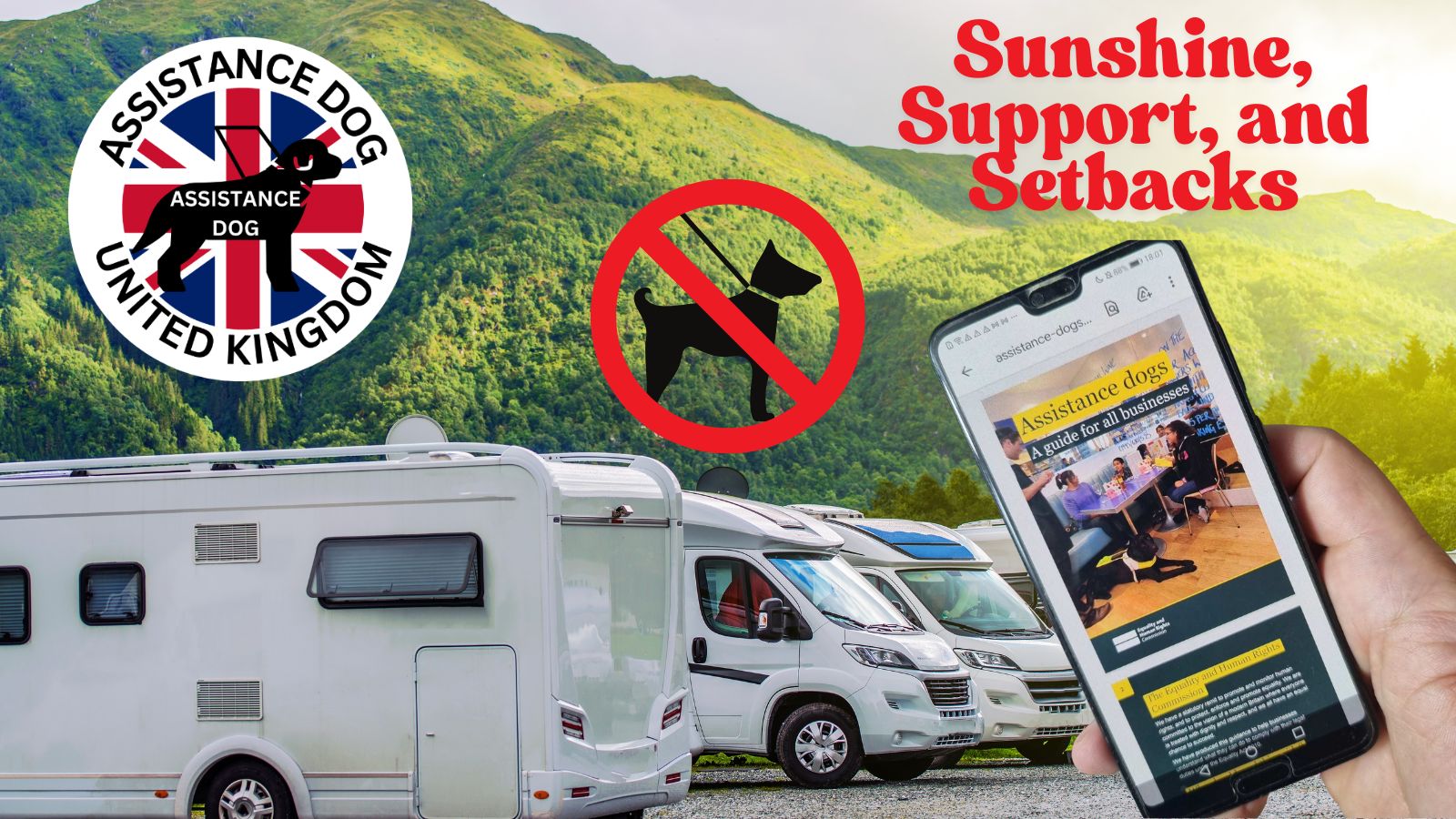
With spring and summer in full swing, there's no better time to enjoy the outdoors with your assistance dog. Whether it’s a trip to a festival, a stroll through the garden centre, or a coffee in the sun at your local pub, the warmer weather opens up a world of possibility. But sadly, not every place is as welcoming as it should be.
While the Equality Act 2010 protects your right to access public spaces with an assistance dog, many venues and businesses still misunderstand or overlook this law. That misunderstanding can turn a peaceful day into a stressful confrontation.
Common Places Where Handlers Still Face Refusals
Even in 2025, assistance dog handlers continue to be refused access in places like:
Outdoor Cafés & Beer Gardens (e.g., Wetherspoons)
Garden Centres & Plant Nurseries
High Street Clothing Stores
Supermarkets & Small Convenience Shops
Food Stalls with "No Dogs" Signs
Open-Air Events or Local Community Fairs
Train & Bus Services with Uninformed Staff
Campsites & Caravan Parks
These are all places where public access should be granted, yet misunderstandings persist. Being caught off guard can be upsetting — especially if you're just trying to enjoy a normal day out.
You Shouldn't Have to Choose Between Fresh Air and Your Support
Your assistance dog is essential to your independence. You’ve put in the time and training, and you shouldn’t have to justify yourself at every door. That’s where proof of registration and legal clarity can make all the difference.
Many people still believe that assistance dogs must be trained by a charity or organization. However, in the UK, owner-trained assistance dogs are fully legal and protected under the Equality Act 2010, as long as the dog is trained to mitigate a disability.
To support handlers of owner-trained assistance dogs, we offer a voluntary registration service that gives you the tools you need to help educate others and avoid unnecessary confrontations. Our registry does not certify or license dogs, because that is not required by UK law. Instead, it provides helpful documentation and smart identification tools that make life easier for handlers.
Our Assistance Dog Registry offers smart, professional tools to help you:
Instantly show your dog’s role and legal rights with Smart ID Cards
Provide staff with proof via a QR Code linked to the Equality Act 2010
Wear your support gear with confidence (lanyard, dog tags, vest)
Enjoy the benefits of voluntary registration that supports your rights without replacing or contradicting the law
What You Can Do Now
Know your rights: You are protected under the Equality Act 2010.
Be prepared: Don’t wait for a refusal to wish you had documentation.
Register today: Our lifetime or monthly options come with everything you need to make public access smoother and less stressful.
Stay Confident This Summer
You deserve peace of mind when you're out enjoying the sunshine. With proper registration and public-friendly ID tools, you can confidently navigate the spaces where others still need educating.
Register your assistance dog today and enjoy every sunny moment without setbacks.
2. Why is socialization important for assistance dogs?
Proper socialization ensures assistance dogs remain calm, focused, and well-behaved in various public settings, enabling them to perform their duties effectively.
3. At what age should I start socializing my assistance dog?
It's beneficial to begin socialization during puppyhood; however, with patience and consistent training, dogs of any age can learn to navigate public environments confidently.
4. How long does it take to socialize an assistance dog?
The duration varies based on the dog's temperament, previous experiences, and the consistency of training. Regular, positive exposure to different environments is key.
5. Can I socialize my assistance dog if they are older?
Yes, older dogs can be socialized successfully. While it may require more time and patience, with positive reinforcement, they can adapt to new situations.
6. What should I do if my assistance dog shows fear in public?
If your dog exhibits fear, calmly remove them from the situation and gradually reintroduce the stimulus at a comfortable distance, rewarding calm behavior.
7. How do I handle public distractions during training?
Teach focus commands like "watch me" to redirect your dog's attention. Gradual exposure to distractions, paired with positive reinforcement, can improve focus.
8. Are there specific public places ideal for socialization?
Begin with quiet areas like parks, then progress to busier environments such as cafes, public transport, and shopping centres as your dog becomes more comfortable.
9. How can I ensure my assistance dog behaves appropriately around other animals?
Controlled introductions and rewarding calm behaviour are essential. Consistent training helps your dog remain focused on their tasks, even around other animals.
10. What are the legal requirements for assistance dogs in public places?
In many regions, assistance dogs are permitted in public areas to support their handlers. It's important to familiarize yourself with local laws and regulations regarding assistance dogs.
Learn More – Additional Assistance Dog Letter Templates
If you found this travel guide useful, you may also benefit from these other essential assistance dog letter templates we’ve published:
📌 Housing Accommodation Request Letter– Need to request reasonable accommodation from your landlord? This template ensures your rights under the Equality Act 2010 are respected.
📌 Workplace Assistance Dog Request Letter – If you need accommodations to bring your assistance dog to work, this letter outlines your legal rights and reasonable adjustments your employer should consider.
Imagine relying on your assistance dog to manage daily life, only to be refused entry to a pub. Sadly, this scenario happens more often than it should — and recent incidents involving Wetherspoon pubs have highlighted a troubling pattern. But what does the law actually say? When is a refusal illegal? And most importantly, what can you do if this happens to you?
In this post, we’ll break down the legal rights of assistance dog owners, use Wetherspoon as a case study, and give you practical steps to take when you're faced with an unlawful refusal.
What the Equality Act 2010 Says The Equality Act 2010 is the main piece of legislation protecting disabled individuals in the UK. It clearly states that service providers — including pubs, shops, and restaurants — must make "reasonable adjustments" to ensure people with disabilities can access their services. This includes allowing assistance dogs.
Crucially, the law does not require assistance dogs to be trained by a charity or Assistance Dogs UK (ADUK) member. Owner-trained assistance dogs are equally protected under the Equality Act. Denying access based on where a dog was trained is legally irrelevant.
Refusing entry to someone with a legitimate assistance dog can be classed as disability discrimination, which is illegal. In most cases, there are no valid exceptions.
Wetherspoon's Policy: Where They Get It Wrong Wetherspoon’s official website claims they only allow assistance dogs trained by ADUK-accredited charities. They state:
"The exceptions to the policy are trained guide dogs and also assistance dogs with Assistance Dogs UK-accredited training."
This wording is problematic because it excludes a significant number of owner-trained assistance dogs — dogs that are fully protected under UK law. This has led to multiple incidents where handlers have been refused service, even after explaining their rights.
One reported case involved a 13-year-old with fibromyalgia and PTSD being denied entry while using a registered assistance dog. In another case, a mental health support dog was refused and the handler was escorted out. These are not just unfortunate mistakes — they may be illegal actions.
How a Refusal Affects Assistance Dog Handlers Being denied access can be deeply distressing for someone who relies on an assistance dog. It can:
Trigger anxiety or PTSD symptoms
Cause public humiliation
Limit social inclusion
Reinforce stigma and misunderstanding
More than that, it shows a complete lack of understanding of the Equality Act. These refusals suggest that some businesses prioritize internal policy over legal rights — a dangerous and discriminatory approach.
What You Can Do If You Are Refused If you’re ever refused entry to a pub, including a Wetherspoon location, follow these steps:
Stay calm and ask to speak to a manager.
Explain that your dog is an assistance dog and the refusal may be unlawful under the Equality Act.
Carry supporting proof.
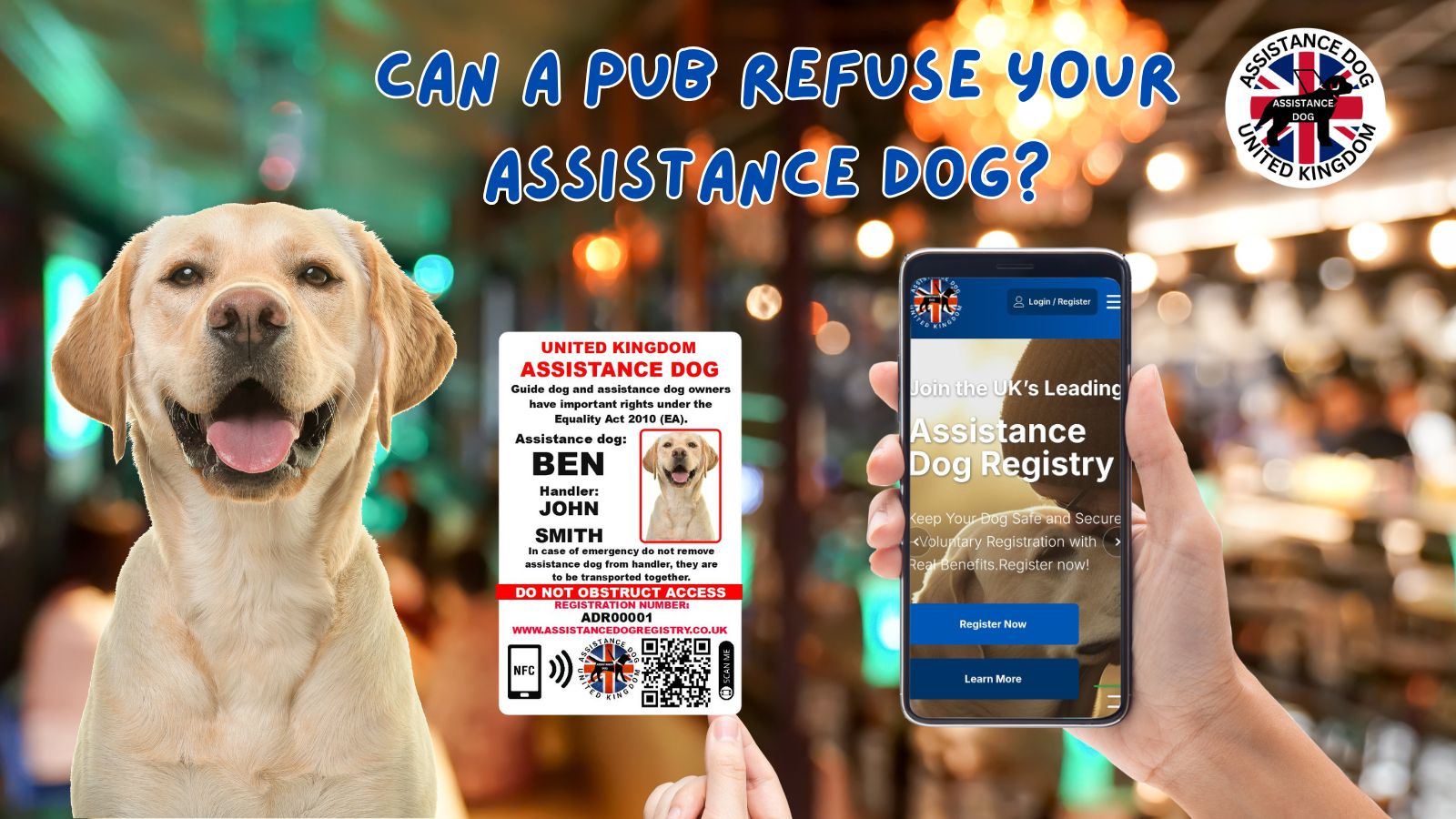
While not legally required, an ID card, QR code linked to your online profile, or vest that says "Assistance Dog" can help clarify things.
Ask the manager to review the Equality Act.
Many are simply uninformed, and a polite reminder of the law may resolve the situation.
Document the refusal.
Record names, times, and what was said. Take photos if needed. Ask for written confirmation of the refusal.
File a formal complaint.
Contact the head office of the company in writing. Detail the event and cite the Equality Act.
Report it to the Equality Advisory Support Service (EASS).
The EASS provides free legal advice and may help escalate the issue.
Seek public support if necessary.
Social media attention often prompts quicker responses. Use it strategically, not emotionally.
Your Rights as an Owner-Trained Assistance Dog Handler Wetherspoon’s reliance on ADUK accreditation is misleading. Many owner-trained dogs meet or exceed the standards of charity-trained dogs. They are trained to assist with real disabilities and have the same public access rights.
You do not need a dog trained by Guide Dogs UK, Dogs for Good, or any other charity to have legal protection.
You do not need to carry a license, registration, or official certificate. The law is based on need and function, not paperwork.
Our Position at Assistance Dog Registry We believe every legitimate handler should be treated with dignity and equality. That’s why our registration platform supports owner-trained teams with:
Smart ID cards with QR code links to a secure handler profile
Custom dog tags, lanyards, and vest options
Educational content on public access laws
Our goal is not to “police” access, but to empower you with tools that promote understanding and reduce conflict.
Final Thoughts: It’s Time for Change When big brands like Wetherspoon misinterpret the law, they put vulnerable individuals at risk. Refusing an assistance dog is not just an inconvenience. It’s discriminatory and potentially unlawful.
If you’ve experienced a refusal, know that you have rights. Use your voice, document your experience, and demand better. The Equality Act is on your side — and so are we.
2. Why is socialization important for assistance dogs?
Proper socialization ensures assistance dogs remain calm, focused, and well-behaved in various public settings, enabling them to perform their duties effectively.
3. At what age should I start socializing my assistance dog?
It's beneficial to begin socialization during puppyhood; however, with patience and consistent training, dogs of any age can learn to navigate public environments confidently.
4. How long does it take to socialize an assistance dog?
The duration varies based on the dog's temperament, previous experiences, and the consistency of training. Regular, positive exposure to different environments is key.
5. Can I socialize my assistance dog if they are older?
Yes, older dogs can be socialized successfully. While it may require more time and patience, with positive reinforcement, they can adapt to new situations.
6. What should I do if my assistance dog shows fear in public?
If your dog exhibits fear, calmly remove them from the situation and gradually reintroduce the stimulus at a comfortable distance, rewarding calm behavior.
7. How do I handle public distractions during training?
Teach focus commands like "watch me" to redirect your dog's attention. Gradual exposure to distractions, paired with positive reinforcement, can improve focus.
8. Are there specific public places ideal for socialization?
Begin with quiet areas like parks, then progress to busier environments such as cafes, public transport, and shopping centres as your dog becomes more comfortable.
9. How can I ensure my assistance dog behaves appropriately around other animals?
Controlled introductions and rewarding calm behaviour are essential. Consistent training helps your dog remain focused on their tasks, even around other animals.
10. What are the legal requirements for assistance dogs in public places?
In many regions, assistance dogs are permitted in public areas to support their handlers. It's important to familiarize yourself with local laws and regulations regarding assistance dogs.
Learn More – Additional Assistance Dog Letter Templates
If you found this travel guide useful, you may also benefit from these other essential assistance dog letter templates we’ve published:
📌 Housing Accommodation Request Letter– Need to request reasonable accommodation from your landlord? This template ensures your rights under the Equality Act 2010 are respected.
📌 Workplace Assistance Dog Request Letter – If you need accommodations to bring your assistance dog to work, this letter outlines your legal rights and reasonable adjustments your employer should consider.
To provide the best experiences, we use technologies like cookies to store and/or access device information. Consenting to these technologies will allow us to process data such as browsing behavior or unique IDs on this site. Not consenting or withdrawing consent, may adversely affect certain features and functions.
Functional
Always active
The technical storage or access is strictly necessary for the legitimate purpose of enabling the use of a specific service explicitly requested by the subscriber or user, or for the sole purpose of carrying out the transmission of a communication over an electronic communications network.
Preferences
The technical storage or access is necessary for the legitimate purpose of storing preferences that are not requested by the subscriber or user.
Statistics
The technical storage or access that is used exclusively for statistical purposes.The technical storage or access that is used exclusively for anonymous statistical purposes. Without a subpoena, voluntary compliance on the part of your Internet Service Provider, or additional records from a third party, information stored or retrieved for this purpose alone cannot usually be used to identify you.
Marketing
The technical storage or access is required to create user profiles to send advertising, or to track the user on a website or across several websites for similar marketing purposes.